
The Las Vegas Grand Prix is one of the loudest shows you can ever attend. At full throttle, a modern Formula 1 car can hit 145 dB. To put that in perspective, sounds over 110 dB can cause instant, permanent hearing damage.
For F1 drivers spending hours inside the car, protection is essential. So, how do these racers manage to focus on a 200 mph corner while protecting their ears? Let’s have a closer look on the crucial gear that keeps F1’s best focused and safe on the track.
How the Racers Protect Their Hearing
F1 drivers and crew members face the most extreme noise exposure and use highly specialized gear:
1. Custom-Molded In-Ear Monitors
The primary defense for the drivers are custom-molded earplugs, often with integrated speakers, known as In-Ear Monitors (IEMs) or Drivercomms.
Unlike off-the-shelf foam, the earpieces are made from impressions of the driver’s inner ear. This creates a perfect acoustic seal, which is essential for maximum noise reduction and comfort during the race.
They are designed not just to block noise, but to allow a two-way radio communication with their race engineers and the team pit wall. They filter out the overwhelming engine roar while letting the radio messages through.
2. The Helmet
While not designed purely for sound, the driver’s racing helmet provides a secondary layer of passive noise reduction. The strong carbon fiber shell and the interior padding offer a degree of noise reduction. Also, the wind force over the helmet is a major source of noise. The tight-fitting helmet structure works with the custom ear molds to minimize the impact of this wind noise, and the overall noise.
Protection for the Pit Crew
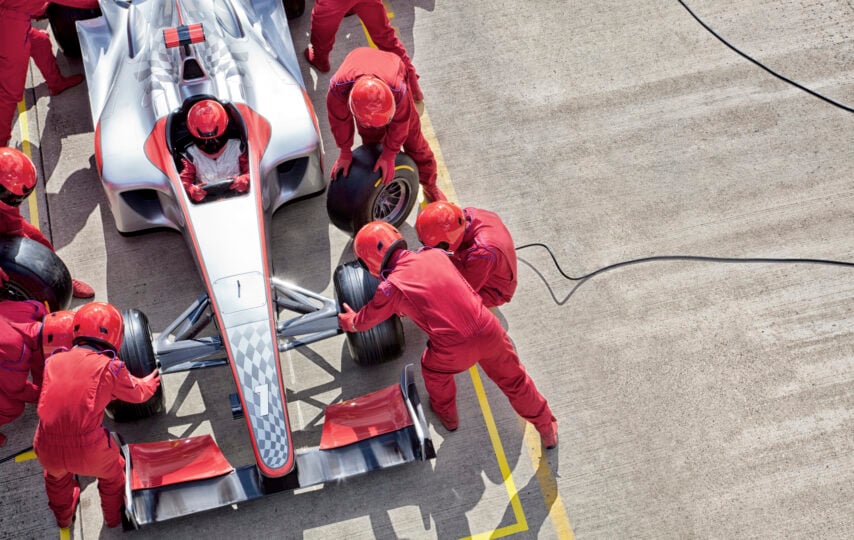
When a car comes into the pit box, the pit crew faces some of the highest and most immediate noise exposure on the track.
The mechanics usually stand inches away from a roaring engine, in addition to the air guns used to change tires.
Pit crew members typically use Over-the-Ear Earmuffs, often called headsets, that offer a high degree of passive noise reduction.
The most important feature of these headsets is the integrated communication system. They are equipped with microphones and speakers, allowing the crew members to receive constant, clear instructions from the pit wall and communicate with each other.
Protection for Spectators
While a fan in the grandstands is further away than the pit crew, noise levels are still high enough to cause hearing damage, especially over several hours of exposure during the entire weekend.
Depending on their proximity to the track, they can experience noise levels exceeding 100-110 dB, especially as cars accelerate down the straights or through tunnels of buildings.
Filtered Earplugs can be the best recommendation for fans is high-fidelity filtered earplugs. These are superior to basic foam earplugs as they use an acoustic filter that reduces the volume evenly across all frequencies. Industrial-grade earmuffs are also a good, simple alternative, especially for children whose ears are more sensitive.
Enjoying a Safe Weekend
- Noise is Real: Current F1 cars are loud enough to cause immediate and irreparable hearing damage. make sure not to attend without protection.
- Plan Ahead: Buy your ear protection before you arrive.
- Take Breaks: If you’re wearing basic foam plugs, step away from the track for a few minutes every hour or so to give your ears a chance to recover.
Protect your hearing, and you’ll ensure that the Las Vegas Grand Prix remains a fantastic memory.
Related:
- These lost ’90s cars are a lesson in slowing down & smelling the gasoline
- These once-hated classic cars remind us failure isn’t the finish line
Like MediaFeed’s content? Be sure to follow us.
This article was produced and syndicated by MediaFeed.us.
AlertMe