
On March 12, 1894, Joseph A. Biedenharn, in a small candy store in Vicksburg, Mississippi, became the first person to sell Coca-Cola in glass bottles.
Today, the sight of a Coke bottle is one of the most common things in the world. However, for the first several years Coca-Cola was only available as a fountain drink, mixed on-site at pharmacy soda.
The drink was originally invented in 1886 by John Pemberton, a pharmacist who was looking for a substitute for morphine. It was later sold as a temperance drink and eventually became a popular regional treat.
When Asa Griggs Candler took over the brand, he was very successful at selling the syrup to soda fountains, but he was skeptical about bottling it. Even when his own nephew suggested that bottling could increase sales, Candler wasn’t interested.
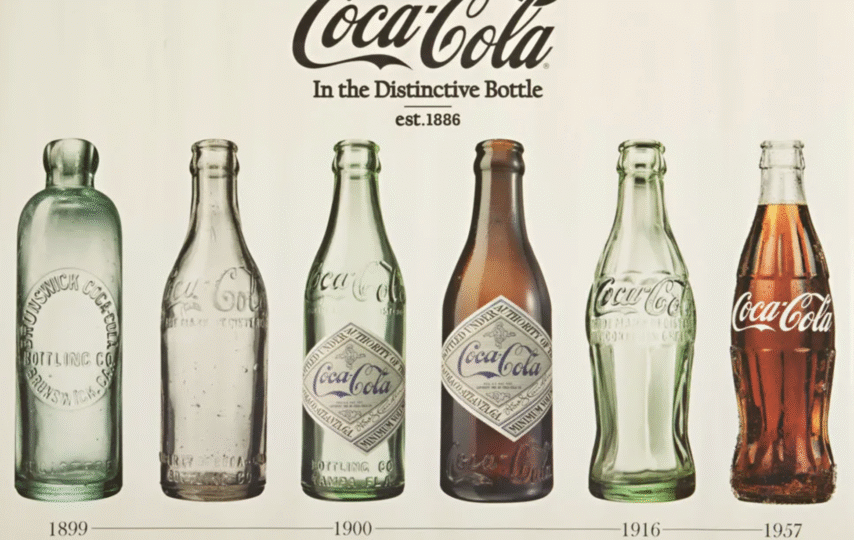
Joseph Biedenharn, however, saw the potential. He realized that if he could put the drink into bottles, people could enjoy it and sales would increase. He used “Hutchinson” bottles, reusable glass containers that looked nothing like the Coke bottles we see today.
In 1899, Candler, then president of The Coca-Cola Company, sold the exclusive rights to bottle and sell Coca-Cola throughout most of the United States to two Chattanooga lawyers, Benjamin F. Thomas and Joseph B. Whitehead, for just one dollar.
Because he didn’t believe bottling would ever be a major source of money, the contract had no end date and set the price of a bottle at five cents. This mistake kept the price of Coke at a nickel all the way until 1959.
As the drink became more popular, other companies tried to copy it. Drinks with names like “Koka-Nola” and “Toka-Cola” started appearing in similar bottles. To stop the confusion, Coca-Cola decided they needed to have a bottle with a unique design.
On April 26, 1915, the Trustees of the Coca‑Cola Bottling Association voted to spend up to $500 to design a bottle for Coca‑Cola. Eight to 10 glass companies across the U.S. received a challenge to develop a “bottle so distinct that you would recognize if by feel in the dark or lying broken on the ground.” With that simple creative brief, the competition was on.
The Root Glass Company in Indiana won the design contest. Their inspiration came from an illustration of a cocoa bean, which had distinct ribs and a curved shape. This led to the famous bottle we know today. Over the years, it earned nicknames like the “hobbleskirt” bottle and the “Mae West” bottle.
While the iconic Coke bottle is universally recognized, its form has evolved from the 1915 prototype to today’s modern aluminum versions. Even as larger family sizes launched in 1955, designers like Raymond Loewy worked to maintain its classic proportions, a shape so famous it appeared as a simple silhouette on the company’s 1996 annual report with the challenge: “Quick, Name a Soft Drink.”

Image Credit: Wikipedia
Its cultural impact is just as significant. Andy Warhol famously used the bottle to represent mass culture in the 1960s, also Salvador Dalí featured it in a 1943 painting.
Ask us! What questions do you have about content, strategy, pop culture, lifestyle, wellness, history or more? We may use your question in an upcoming article!
Like MediaFeed’s content? Be sure to follow us.
This article was produced and syndicated by MediaFeed.us.
AlertMe