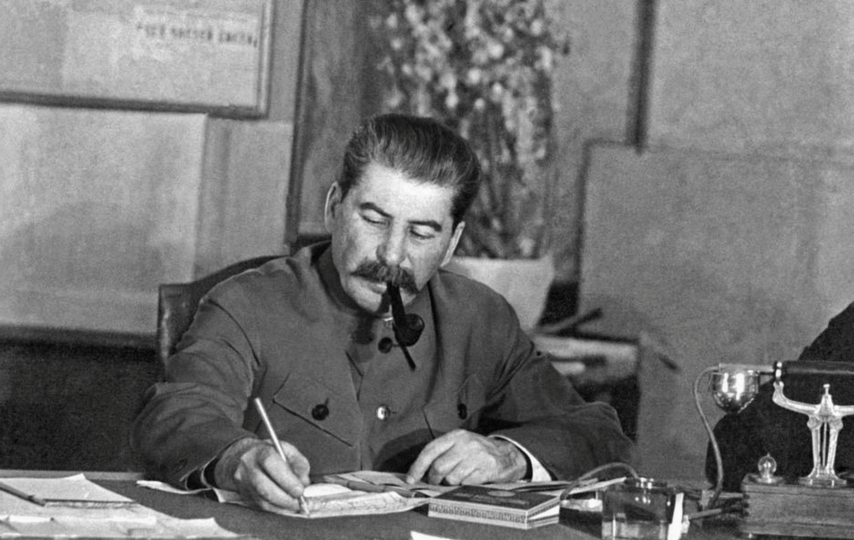

On March 5, 1953, the Soviet Union faced a massive shift in power. Joseph Stalin, the leader who had ruled the nation since 1924, died in Moscow ending a nearly 30-year reign that transformed the Soviet Union and impacted the entire world.
Stalin was born Ioseb Dzhugashvili in 1878 in Georgia. At the time of his birth, Georgia was part of the old Russian Empire.
Stalin’s childhood was difficult and shaped by his family environment. His father was a drunk man who treated his family so badly. In contrast, his mother was a pious woman who worked as a washerwoman. Stalin received an education through an Orthodox Church-run school. It was here that he learned to speak Russian. Even after decades of living in the heart of the Soviet government, he spoke the language with a heavy Georgian accent for the rest of his life.
By 1924, Stalin had become the leader of the Soviet Union. While he was a hero to some for his role in defeating Nazi Germany, he was feared by many others. Under his leadership, the Soviet Union grew into a global superpower, especially following the events of World War II. However, his rule was also characterized by strict discipline and the elimination of those he considered enemies of the state.
Stalin’s death in Moscow on March 5 brought an immediate sense of uncertainty to the Soviet people. For nearly three decades, the citizens of the USSR had known no other leader. He had become a central figure in every aspect of Soviet life, from the economy to the military. The news of his passing was a monumental event in 20th-century history.
In the final years of his life Stalin’s growing paranoia suggested he was preparing to plunge the nation into another wave of terror. The death penalty, which was cancelled in 1947, was restored to deal with spies and traitors, and the so-called Leningrad Affair of 1949 led to further demotions and execution of party leaders. By the early 1950s, the Soviet press was filled with denunciations, and rumors spread that even Stalin’s closest associates were at risk of being ousted or arrested.
At that time Stalin also prepared files against many Jewish figures in the government, accusing them of collaborating with “American-Zionist imperialism.” This suspicion got even worse in January 1953 as nine doctors, most of whom were Jewish, were accused of attempting to assassinate Soviet leaders through wrong medical treatment.
Stalin’s final moments began with a major brain hemorrhage on the night of March 1. The medical team provided what care they could, even using leeches to reduce his blood pressure, but he remained paralyzed and unconscious until his death at 9:50 p.m. on March 5.
Ask us! What questions do you have about content, strategy, pop culture, lifestyle, wellness, history or more? We may use your question in an upcoming article!
Like MediaFeed’s content? Be sure to follow us.
This article was produced and syndicated by MediaFeed.us.
AlertMe