10 fast food items that disappeared for a reason
Fast food chains constantly introduce new menu items seeking the next viral sensation or profit-driving staple, but most innovations fail to achieve lasting success. The industry’s experimental nature yields numerous menu flops that quickly disappear after disappointing sales and customer backlash. Understanding why specific items failed reveals patterns in fast food marketing, operational limitations, and customer expectations that determine which innovations succeed.
The term “scam” is not used in a legal sense, but rather to describe products that were grossly overhyped, misleading compared to their advertising, offered poor value for the price, or were logistically flawed in ways that wasted customer time and money. These menu items promised experiences or value they couldn’t deliver, creating customer disappointment that undermined brand trust. The failures resulted from broken promises, poor execution, or simply being bad deals that customers quickly recognized and rejected.
This article explores ten infamous fast food menu items that felt like rip-offs to customers and were ultimately removed from menus due to their fundamental flaws in concept, execution, or value proposition.

McDonalds / Wiki Commons
The Arch Deluxe
McDonald’s introduced the Arch Deluxe in 1996 as a premium burger designed to appeal to adult customers with sophisticated tastes, offering a step above typical fast food options. The massive marketing campaign positioned the burger as gourmet dining suitable for mature palates, featuring upgraded ingredients including peppered bacon, stone-ground mustard, and a potato flour bun. The advertising budget exceeded $100 million, making it one of the most expensive product launches in the history of fast food.
The fundamental problem was that the Arch Deluxe represented a slightly modified Quarter Pounder sold at significantly higher prices without delivering meaningfully superior taste or quality. Adult customers largely ignored the new burger, preferring familiar menu items at lower prices. The marketing campaign’s emphasis on excluding children alienated families who represented McDonald’s core customer base. The spectacular failure cost McDonald’s hundreds of millions in development and marketing while generating minimal sales, making it one of the biggest product flops in fast food history.

McDonalds / Wiki Commons
The McDLT
The McDLT featured a dual-chamber Styrofoam container that separated the hot beef patty from the cold lettuce and tomato, requiring customers to assemble the burger themselves after receiving it. McDonald’s marketed this as preserving freshness and optimal temperature for each component. The packaging represented a significant innovation in fast food presentation, generating initial curiosity and sales.
The unwieldy packaging created environmental waste concerns during an era of increasing ecological awareness about Styrofoam disposal. Customers found the assembly process inconvenient rather than beneficial, particularly when eating while driving. The packaging costs exceeded standard burger containers, forcing higher menu prices without corresponding value improvements. The combination of environmental criticism, customer inconvenience, and poor value proposition led to discontinuation as the novelty wore off and practical problems became apparent.

Burger King
Burger King Satisfries
Burger King introduced Satisfries in 2013 as a healthier alternative to regular fries, featuring reduced calories and fat through different preparation methods. The marketing emphasized health benefits for customers seeking better fast food options. The product aimed to capture health-conscious consumers who might otherwise avoid fast food entirely.
The actual calorie and fat reductions were negligible, representing less than 20% improvement over regular fries. Customers noticed inferior taste and texture compared to traditional fries, making the minor health benefits an insufficient justification for the quality sacrifice. The premium pricing for a product that tasted worse than the cheaper original created a poor value proposition. Sales remained weak as customers overwhelmingly preferred regular fries, leading to quiet discontinuation after the marketing push failed to generate sustained interest.

Pizza Hut
Pizza Hut Priazzo
Pizza Hut launched the Priazzo in 1985 as Chicago-style deep-dish pizza requiring extended preparation time compared to standard menu items. The marketing positioned it as a premium offering, justifying higher prices and longer waits. The product aimed to elevate Pizza Hut’s image beyond basic pizza delivery.
The 20-30 minute preparation time contradicted fast food expectations for quick service, creating operational problems and customer frustration. The extended cooking requirements overwhelmed kitchen capacity during busy periods, slowing service for all customers. The price premium and long waits failed to deliver correspondingly superior taste or quality compared to standard pizzas. The fundamental incompatibility between deep dish preparation requirements and the fast casual dining model made the product unsustainable, leading to discontinuation as operational problems outweighed any sales benefits.
Taco Bell / Wiki Commons
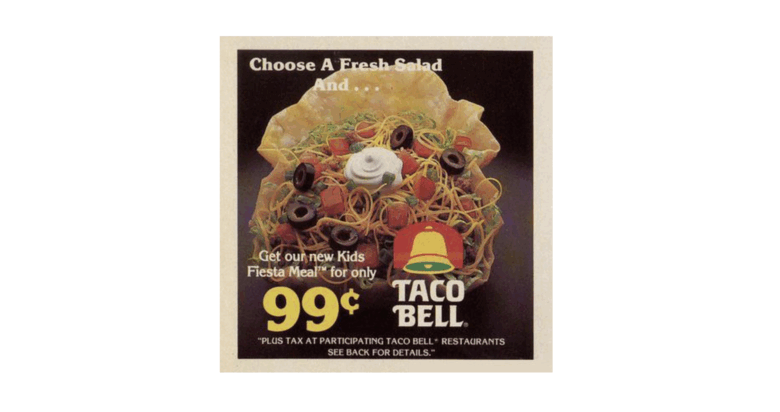
Taco Bell Seafood Salad
Taco Bell attempted seafood offerings, including seafood salad during experimental menu expansion phases, featuring imitation crab and other processed seafood ingredients. The product aimed to diversify the menu beyond traditional Mexican-inspired items. The seafood salad represented an attempt to capture health-conscious customers seeking lighter options.
Customers expressed skepticism about seafood quality and freshness from a fast food chain specializing in tacos and burritos. The perishable nature of seafood ingredients created food safety concerns and operational challenges for franchises lacking experience with these products. The fundamental mismatch between customer expectations for Taco Bell and seafood offerings resulted in weak sales. The product disappeared quickly as Taco Bell refocused on its core Mexican-inspired menu items, where customer trust and operational expertise were already established.

Wendy’s
Wendy’s Frescata sandwiches
Wendy’s introduced Frescata sandwiches in 2006 as premium deli-style offerings competing with Subway’s fresh sandwich positioning. The marketing emphasized artisan bread and quality deli meats, distinguishing these sandwiches from typical fast food offerings. The product line aimed to capture lunch customers seeking alternatives to burgers.
Customer complaints focused on dry bread, low-quality meat, and poor value compared to dedicated sandwich shops. The execution failed to deliver on the fresh, premium positioning promised in advertising. The sandwiches couldn’t compete with those from Subway or local delis in terms of taste, quality, or value. The operational complexity of maintaining sandwich ingredients and preparation, along with added costs, resulted in insufficient sales to justify continued production. Wendy’s discontinued the line and refocused on burgers and chicken product,s where the chain maintained competitive advantages.

McDonald’s
McDonald’s Mighty Wings
McDonald’s launched Mighty Wings in 2013 as a premium chicken wing offering priced significantly higher than typical fast food items. The product aimed to capture the growing popularity of chicken wings beyond traditional wing restaurants. The marketing positioned these as restaurant-quality wings available through drive-through convenience.
The pricing of around $1 per wing seemed excessive for fast food, particularly when dedicated wing restaurants offered comparable or better quality at similar prices. The heavily breaded wings and small portion sizes created poor value perception. Customers accustomed to McDonald’s value pricing were reluctant to accept the premium pricing strategy. The massive overproduction resulted in millions of pounds of unsold wings, which McDonald’s eventually discounted heavily to clear its inventory. The pricing miscalculation and overproduction resulted in a significant financial loss.

Burger King
Burger King Dinner Baskets
Burger King introduced Dinner Baskets in the 1990s, featuring sit-down table service after 4 PM with basket-style meals similar to casual dining restaurants. The concept aimed to capture dinner customers seeking more substantial meals than those typically offered by fast food establishments. The table service represented a dramatic departure from Burger King’s quick-service model.
Customers expecting fast service were confused and frustrated by the slow table service model that contradicted Burger King’s core identity. The operational complexity of maintaining two different service models in the exact locations created confusion and inefficiency among staff. The dinner basket meals offered poor value compared to actual casual dining restaurants. The fundamental incompatibility between sit-down service and fast food expectations made the concept unsustainable. Burger King abandoned the experiment and returned to standard quick-service operations across all hours.

McDonald’s
McDonald’s Hula Burger
McDonald’s developed the Hula Burger as a meatless option for Catholic customers during Lent, featuring a grilled pineapple slice and cheese on a bun instead of a beef patty. The product competed internally against the Filet-O-Fish sandwich, also developed for the same market. The Hula Burger represented an extremely low-cost alternative to developing a proper fish sandwich.
The grilled pineapple and cheese combination failed to appeal to customers seeking satisfying meatless alternatives. The product felt like a cheap, low-effort substitute rather than a legitimate menu item. The simultaneously introduced Filet-O-Fish provided a vastly superior meatless option that customers actually enjoyed. The Hula Burger never achieved any meaningful sales and disappeared almost immediately as the Filet-O-Fish became the permanent Lent offering.

Burger King
Burger King Black Halloween Whopper
Burger King introduced the Black Whopper for Halloween 2015, featuring a black-colored bun dyed with A.1. Steak Sauce and squid ink. The novelty item was designed to generate social media buzz and attract customers seeking unique food experiences. The marketing emphasized the dramatic visual appearance and Halloween theming.
The unexpected side effect of turning consumers’ feces green created viral social media panic and negative publicity that overwhelmed any positive novelty appeal. The alarming bathroom experiences led to widespread customer complaints and concerns about food safety despite the harmless nature of the coloring. The bizarre bodily effects generated more negative publicity than positive attention. Burger King discontinued the product after the Halloween promotion, as the unsettling side effects made it unsuitable for regular menu inclusion despite generating significant media attention.

hanohiki / iStock
Common patterns in fast food failures
Failed fast food items share recurring characteristics that predict their demise regardless of marketing investment or initial novelty appeal. Products that fail to deliver on their advertising promises create customer disappointment, which undermines brand trust and prevents repeat purchases. The Arch Deluxe and Frescata sandwiches exemplified this pattern by promising premium quality that execution couldn’t support.
Operational complexity presents challenges when products require preparation methods that are incompatible with fast food business models. The Priazzo and Dinner Baskets demonstrated how slow service contradicts customer expectations for quick meals. Products requiring excessive staff time or customer assembly, like the McDL,T create inefficiencies that make them unsustainable despite any taste advantages.
Poor value propositions doom products when customers recognize they’re paying premium prices for inferior quality or quantity compared to alternatives. Mighty Wings and Satisfries failed because they charged more for products that didn’t justify the higher costs through superior taste or meaningful health benefits. Products must deliver clear value advantages over existing menu items or competitive offerings to justify their existence.

Image Credit: DepositPhotos.com.
Conclusion
Fast food scams share common characteristics, including overhyped marketing, poor execution, operational incompatibility with quick service models, and value propositions that customers quickly recognized as inadequate. These failures demonstrate how customers reject items that waste money, time, or violate trust through misleading advertising. The most successful fast food innovations deliver genuine value, operational efficiency, and realistic promises that can be fulfilled through execution.
The fast food industry functions as a perpetual testing ground where most innovations fail, but occasional successes generate substantial profits. Customers demonstrate quick judgment in rejecting items that feel like rip-offs through misleading advertising or poor value. The items that disappear fastest are those that overcompromise and underdeliver, creating disappointment that prevents the repeat purchases necessary for menu permanence. Check out our other fast food history articles here at MediaFeed to discover additional insights into menu innovations and the factors that determine which products succeed or fail.
Related:
Like MediaFeed’s content? Be sure to follow us.
This article was syndicated by MediaFeed.org.
AlertMe