The Price of Flair
The mid-20th century gave us the boldest era of automotive design—the heyday of flashy fins, dazzling chrome, and truly massive engines. Cars were status symbols, defined by flair and aesthetics, often pushing the limits of design with little regard for engineering limitations.
Yet, while these features looked incredibly cool, many were genuinely dangerous. From steering wheels that acted like battering rams to razor-sharp body panels, safety was a distant second to style. This article looks back at the most unsafe car features that defined the era, and how modern design has fundamentally shifted to prioritize driver and passenger safety above all else.

Image Credits: Kukurund/iStock
1: No Seatbelts (or Optional Belts)
It is difficult to believe now, but many cars from the early 1950s and 60s were sold with no seatbelts at all, or only offered them as an extra-cost option.
In a collision, occupants were completely unsecured, often being thrown into the rigid dashboard, windshield, or ejected from the vehicle entirely. The stark reality of the crash safety risks led to the eventual government mandates of the late 1960s. Today, we have mandatory three-point seatbelts, multiple airbags, and sophisticated pre-tensioning systems that work together to secure and protect occupants in a collision.

Image Credit: VeugerStock/iStock
2: Tailfins and Sharp Protrusions
The iconic tailfins of the 1950s and 60s (think Cadillac or Chevrolet) were the ultimate expression of jet-age style. They were sleek, sharp, and, unfortunately, a pedestrian and parking lot hazard.
The severe angles and rigid chrome pieces could easily cause injury to pedestrians in a low-speed impact or even to drivers maneuvering in tight spaces. Today’s vehicles feature pedestrian-friendly design, incorporating softer front ends and ergonomic, rounded edges that are engineered to yield upon impact, drastically reducing the severity of injuries.

Image Credit: webclipmaker/iStock
3: Push-Button or Column-Shift Transmissions
To save space and look futuristic, some early models (like Chrysler) experimented with push-button transmissions located on the dashboard. Others used non-standard column-shift layouts.
These layouts often confused drivers, especially under stress, increasing the mental load and reaction time needed to select the correct gear. A frantic search for “Reverse” could be disastrous. Modern cars rely on standardized automatic shifters or manual transmissions located predictably on the console or column, reducing cognitive error.

Image Credit: derjojo/iStock
4: Large, Unprotected Glass Windows
Mid-century design loved expanses of glass, especially wraparound windshields and huge rear windows, which looked spacious and modern.
However, in the event of a crash, this large, unprotected glass had a higher risk of shattering into sharp fragments, causing severe lacerations. Modern vehicles use tempered glass that breaks into small, dull pieces, and most importantly, laminated safety glass for the windshield, which holds together even when cracked.

Image Credit: sangidan idan/iStock
5: Carburetor Foot Controls (Awkward Pedals)
In some early 1960s and earlier cars, particularly those with manual transmissions, the pedal arrangements were awkward or too close together. This included unusual clutch and brake placements designed for older drum brakes.
This non-standardization caused confusion, especially during panic stops, adding to the mental and physical strain on the driver. Today, modern pedal standardization (accelerator on the right, brake in the middle) is universally enforced, which is a key factor in reducing pedal confusion accidents.

Image Credit: Itza Villavicencio Urbieta/iStock
6: Lack of Crumple Zones
Older cars were built like tanks—literally. They were made of thick, rigid steel frames, giving drivers a false sense of security.
In a high-speed collision, this rigid construction did not absorb impact; instead, the force was transmitted directly to the occupants, resulting in severe internal injuries. Modern engineering uses crumple zones —specifically designed areas of the car body that deform and crush during an accident, absorbing kinetic energy before it reaches the passenger cabin. This, combined with airbags and impact sensors, revolutionized collision survival rates.

Image Credit: FXQuadro/iStock
7: Exposed Fuel Lines or Tanks
Due to design and packaging constraints, some mid-century designs (like early Mustangs or Pintos) placed the gas tank in unshielded positions or used easily damaged fuel lines.
In rear-end collisions, this placement drastically increased the fire risk. Modern vehicle designs prioritize safety by placing the fuel tank in the most protected area (typically ahead of the rear axle), using durable materials, and installing anti-spill valves that shut off fuel flow during an impact.
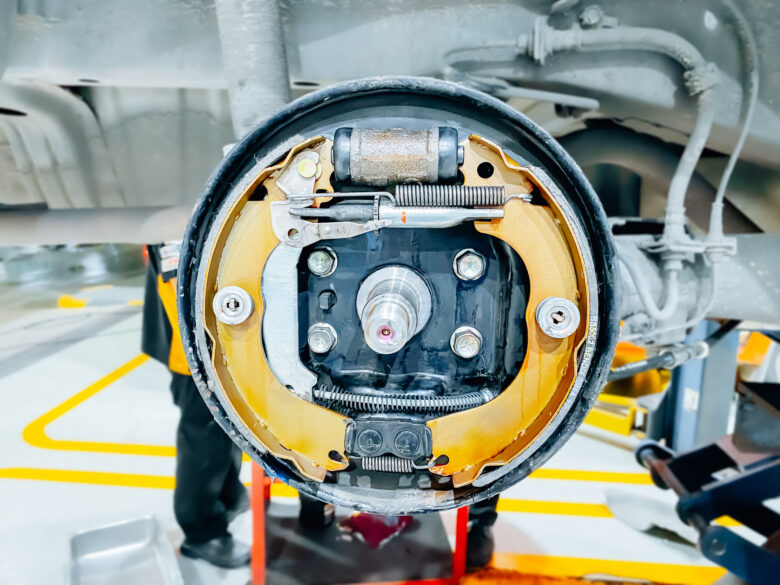
Image Credit: TongTa/iStock
8: Inadequate Drum Brakes
Many classic cars, especially earlier muscle cars built for speed, were equipped with basic drum brakes without anti-lock systems (ABS).
While drum brakes were sufficient for stopping, they were prone to “fading” (losing efficiency) under heavy use or heating up, dramatically increasing the accident risk in wet conditions or during panic stops. Modern braking systems feature ABS, electronic brake-force distribution (EBD), and traction control for guaranteed, predictable stopping power.

Image Credit: kyolshin/iStock
9: Poor Lighting
Older cars often had single or dim headlights and tiny, hard-to-see signal indicators.
This led to significant night driving and visibility hazards, especially on unlit roads. The lack of powerful, consistent illumination contributed to accidents. Today’s vehicles use modern LED, automatic, and adaptive lighting solutions that swivel to illuminate corners, automatically adjust brightness, and ensure the vehicle is seen from great distances.

Image Credit: pifate/iStock
10: Steering Wheels That Didn’t Collapse
A primary hazard in frontal collisions was the rigid steel steering wheel and column.
In a crash, the column acted like a ram, transmitting impact force directly to the driver’s chest or head. This forced the evolution to the collapsible steering column, which telescopes or shears away upon impact, greatly reducing injury severity. Interiors are also now heavily padded to protect against secondary impact.
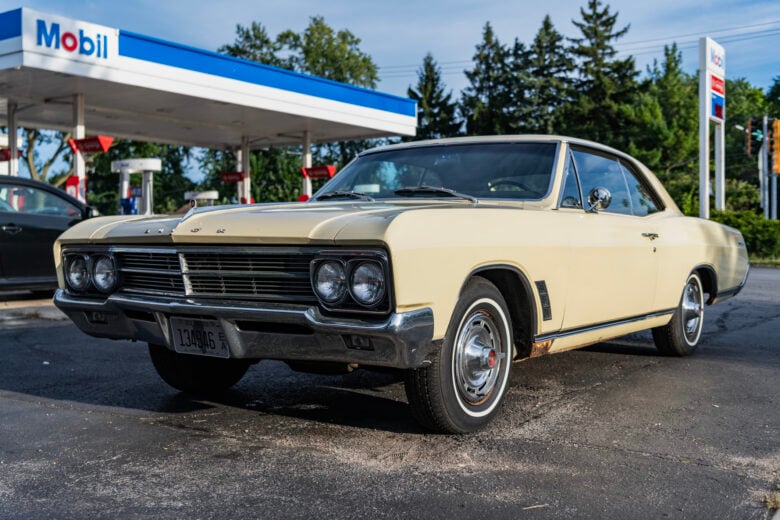
Image Credit: photosvit/iStock
11: Lack of Child Safety Considerations
Children were an afterthought in classic car design. Rear seats often lacked any form of anchor points or even proper seatbelt geometry for smaller passengers.
The modern focus is almost entirely on rear-seat safety, featuring LATCH (Lower Anchors and Tethers for Children) systems, mandatory seatbelt laws, and in some luxury models, rear-seat airbags to protect the most vulnerable occupants.

Image Credit: pondpony/iStock
12: Manual Windows and Doors That Could Jam
Manual windows and locking mechanisms were simple but presented a severe risk of entrapment in a crash or fire. A mangled door or window crank could prevent a quick escape.
Modern electric windows often feature anti-pinch sensors and safety-rated door locks that are designed to fail-safe, ensuring easier access for emergency services and reducing the risk of being trapped inside a damaged vehicle.

Image Credit: dani3315/iStock
Why These Features Persisted
These features persisted for a few key reasons: design trends prioritized aesthetics; cost-saving measures kept complex safety engineering out; and crucially, there was a lack of safety legislation. Car companies had little incentive to invest in features that added cost but didn’t directly boost performance or style.
It took immense consumer awareness, the publication of works like Ralph Nader’s Unsafe at Any Speed, and decisive government legislation (NHTSA, 1970) to fundamentally change car design forever.

Image Credit: EmilHuston/iStock
Safety as the Ultimate Design
The cars of the mid-20th century were a spectacular mix of innovation, flair, and genuine danger. They represent a period when the thrill of the drive overshadowed the importance of occupant protection.
Modern cars represent a phenomenal balance of design, comfort, and wellness/safety engineering. Every vehicle today is a mobile safety cell designed to protect you actively and passively.
Look back at the fins and chrome, but take a moment to appreciate your airbags, crumple zones, and anti-lock brakes—they are the true marvels of modern automotive engineering.
Related:
- 2025 European cars with the most common lemon law complaints
- Red cars, risky drivers? What your ride’s color might say about your safety
Like MediaFeed’s content? Be sure to follow us.
This article was produced and syndicated by MediaFeed.us.
AlertMe