A personal trainer earns an average of $67,012 a year, according to the latest data from Salary.com. However, salaries typically fall somewhere between $48,347 and $82,320.
How much you can make as a personal trainer depends on several factors, including where you live, who you work for, your training experience, and your areas of expertise. Let’s unpack this.
What Are Personal Trainers?
A personal trainer develops customized exercise programs for clients based on individual skill levels, health goals, physical limitations, and other considerations. These professionals work with clients of all ages and skill levels to improve strength, flexibility, and endurance; complete workouts safely and without injury; support them on their weight loss journey; and more.
Trainers are often paid hourly, but they may earn a yearly salary if they work for a gym or high-end client. How much money a personal trainer makes depends on the range of services and level of attention they provide — in general, the more, the better.
It also helps if you have good people skills, as you’ll be working closely with clients. (Not much of a people person? You may want to look into jobs for introverts instead.)
How Much Do Starting Personal Trainers Make an Hour?
The average entry-level wage for a personal trainer in the United States is $29 per hour, or $61,104 a year, according to ZipRecruiter. But depending on a host of factors, personal trainers can earn anywhere from $11.06 to $51.92 an hour.
So is it possible to make $100,000 a year or more as a personal trainer? Short answer: yes. A six-figure income may be attainable once you gain enough experience and establish a steady client base. But keep in mind that those things often take time to develop.
(Learn more: Personal Loan Calculator)
What Is a Personal Trainer’s Yearly Salary by State?
Location can play a major factor in a personal trainer’s income. A professional who’s established in their career may earn an average of $67,012, but as this chart shows, take-home pay can vary significantly from state to state.
Personal Trainer Job Considerations for Pay and Benefits
When you’re just starting out as a personal trainer, there are many factors that may influence the direction of your career. For instance, working at an established commercial gym can offer an opportunity to gain experience, build up a client network, and receive job benefits.
If you’re more of a self-starter and prefer a degree of independence, working as a self-employed personal trainer might be the better fit. You’ll have the ability to set your own hours and hourly rate; however, you’ll also have to pay for health benefits and set money aside for retirement.
Here are some questions to ask yourself when starting a career as a personal trainer:
- How many hours are you willing to work?
- Would you rather work for someone else or be your own boss?
- Do you need health insurance benefits?
- Where do you see yourself in five to 10 years?
- What type of clients do you want (ex. senior citizens, athletes)?
- Are you willing to commute or relocate?
- What additional certifications might you need?
- What are your financial goals?
Establish what you need to earn as a personal trainer in order to cover your expenses and maintain the lifestyle you want. It can help to sit down and create a budget.
As your personal trainer career gets going, you can lean on financial tools like a money tracker app to help you monitor your spending and saving.
Tips to Increase a Personal Trainer’s Salary
Clients can come and go for a number of reasons, but there are some things you can do as a personal trainer to keep the ones you have and attract new ones. Here are some strategies to consider:
- Listen to your clients, and be willing to adapt to their needs.
- Sharpen your motivational skills. Pay attention to other successful trainers and how they inspire their clients.
- Be empathetic. Many clients may struggle during their workouts, both physically and psychologically. Empathy can go a long way in maintaining healthy client relations.
- Go where you’re needed. Investigate niches where your expertise can be of use, be it an elderly care center, health center, or a new neighborhood gym.
- Network and market yourself. Chat up members at your gym and discuss their fitness goals. You can also promote your own fitness journey and methods on social media.
- Earn new certifications. Get certified in CPR, yoga, Pilates, and nutrition. The more you know, the more in-demand you may be.
Pros and Cons of Being a Personal Trainer
As with any job, there are pluses and minuses to working as a personal trainer. Here are some of the benefits and challenges of the field:
Pros:
- Flexible hours. You can often schedule clients when you want to.
- Professional control. You’re able to build up your business through marketing and networking, adding clients as you raise your earning goals.
- Staying physically fit. You’ll have to practice what you preach. Staying in shape is a job requirement.
- Personal satisfaction, especially when you help a client meet their goals.
Cons:
- Fluctuating income/job security. There’s no way to predict how many clients you may have month-to-month or year-to-year.
- Lack of benefits. Many personal trainers work for themselves and have to pay for their own health and dental insurance, plus save for retirement.
- Nontraditional work hours. Although you have the ability to make your own schedule, most of your working clients will likely request early morning, evening, or weekend sessions.
- Shorter career lifespan. Even the most in-shape trainer ages, and there may come a day where you struggle to physically keep up with your clients.
The Takeaway
A personal trainer’s salary can rise and fall with the ebb and flow of clients, but there is also no limit to the amount of money you can make. Whether you are working with a few dedicated clients or creating your own global fitness brand, being a personal trainer can be a great way to earn a salary while keeping yourself and your finance goals in shape.
This article originally appeared on SoFi.com and was syndicated by MediaFeed.org
SoFi Relay offers users the ability to connect both SoFi accounts and external accounts using Plaid, Inc.’s service. When you use the service to connect an account, you authorize SoFi to obtain account information from any external accounts as set forth in SoFi’s Terms of Use. Based on your consent SoFi will also automatically provide some financial data received from the credit bureau for your visibility, without the need of you connecting additional accounts. SoFi assumes no responsibility for the timeliness, accuracy, deletion, non-delivery or failure to store any user data, loss of user data, communications, or personalization settings. You shall confirm the accuracy of Plaid data through sources independent of SoFi. The credit score is a VantageScore® based on TransUnion® (the “Processing Agent”) data.
*Terms and conditions apply. This offer is only available to new SoFi users without existing SoFi accounts. It is non-transferable. One offer per person. To receive the rewards points offer, you must successfully complete setting up Credit Score Monitoring. Rewards points may only be redeemed towards active SoFi accounts, such as your SoFi Checking or Savings account, subject to program terms that may be found here: SoFi Member Rewards Terms and Conditions. PDF File. SoFi reserves the right to modify or discontinue this offer at any time without notice.
Third-Party Brand Mentions: No brands, products, or companies mentioned are affiliated with SoFi, nor do they endorse or sponsor this article. Third-party trademarks referenced herein are property of their respective owners.
Financial Tips & Strategies: The tips provided on this website are of a general nature and do not take into account your specific objectives, financial situation, and needs. You should always consider their appropriateness given your own circumstances.
More from MediaFeed:
18 Odd But Necessary Things Under $50 You Didn’t Know You Needed

Let’s face it, life is already complicated enough without little inconveniences like a car that reeks of stinky kids, period cramps, or wasting product at the end of a squeeze tube. I’ve found 18 innovative items that solve life’s little problems and others that you should have on hand “just because.” Looking for more? These are worth the splurge.
Depositphotos

This is my new favorite air freshener for the car. It emits NO smell, so there’s no cloying fragrance, yet, it’s effective enough to keep a car odor-free, no matter how many skinky kids or pets you’re carting around. PURGGO is made with 100 percent bamboo charcoal, which naturally absorbs odor for a full year. Simply hang it behind one of the front car seats and breathe easy! When it stops working, simply place it in sunlight for several hours to refresh its stink-killing ability. PURGGO is healthy and safe for you, your kids, and your pets. It’s also great for people with allergies, asthma, stuffy nose, and other breathing sensitivities.
PURGGO

Multifunctional baby products are essential – after all, we only have so much room in our diaper bags! Cheeky Chompers is a UK-based brand started by two moms who design practical products for moms everywhere. This bamboo and organic cotton blanket functions as a lightweight breastfeeding cover, a burp cloth, a stroller blanket/cover, a swaddle, and more. The silicone rings allow for easy attachment around your neck or to a stroller, and they make excellent teething toys.
Amazon

This isn’t just any pepper spray. This safety tool connects to the Sabre Safety app so if the pepper spray is deployed, your selected contacts will receive text and call alerts. Hopefully, you’ll never have a chance to test it, but you’ll feel more protected if you do!
Sabre
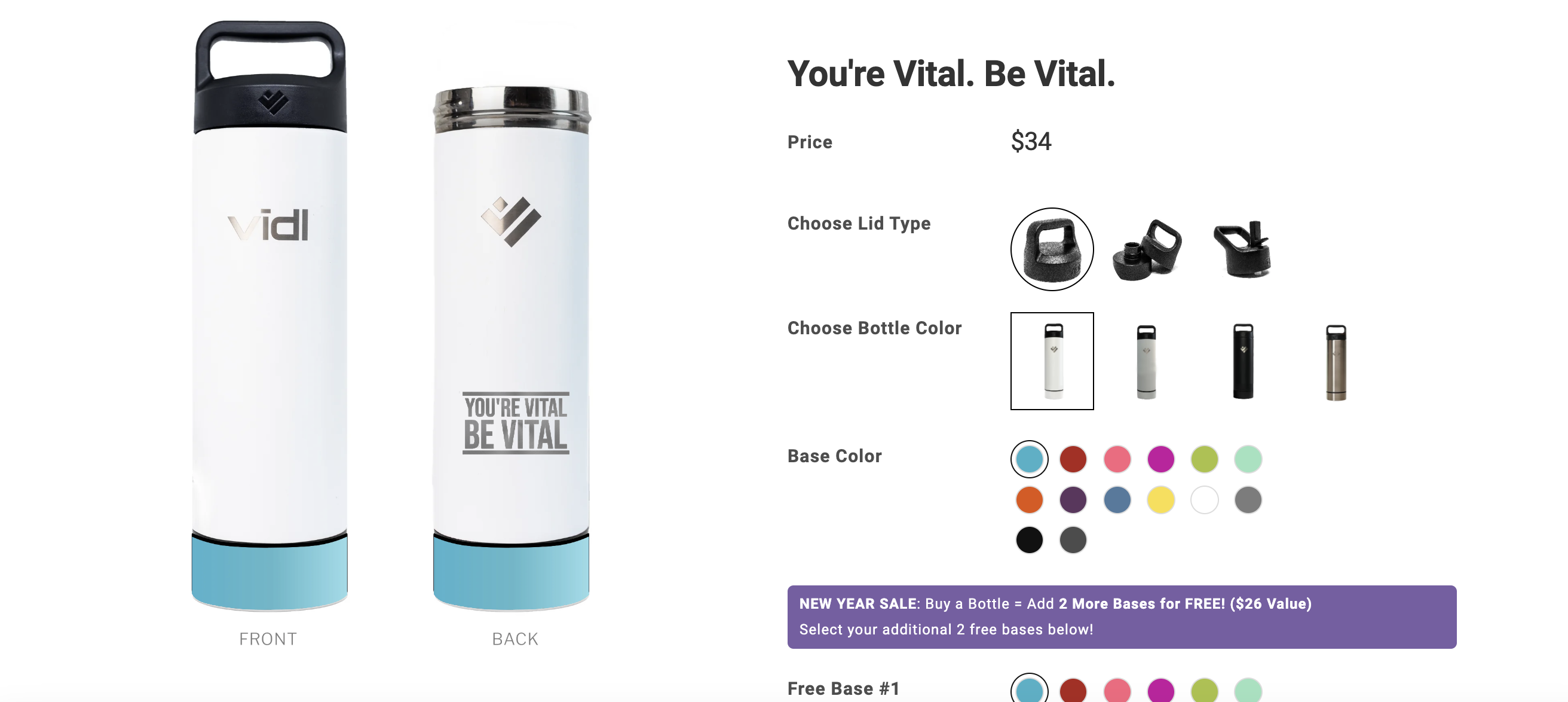
These bottles have a screw-off bottom where you can store earbuds, cash, a key, or even a serving of protein powder. The bottles can be customized with a name or you can choose from several inspirational phrases, like “Destined to Great Things” or “Life is a Gift and So Are You,” for an additional charge. You can choose from several lid types, bottle sizes, and colors for your bottle and base. Right now, buy a bottle and get two free bases (bases are $13 each).
VidlLife

Don’t you hate it when you go to wash your hands and there’s no soap? It’s so important to sanitize our hands, especially during cold & flu season and with COVID still lingering around! These tiny, portable, anti-bacterial soap sheets will surely come in handy. Available in four scents
Miss A

Feeling crabby due to discomfort? This adorable, heatable, lavender-scented plush will soothe cramps or muscle aches in no time. Microwave for 1 minute to heat. Also available in other critters, like shrimp and lobster.
Amazon

This little tool really comes in handy when you are trying to squeeze out the last drops of toothpaste, face cream, or anything else in a tube. Just place the bottom of the tube into the opening of the Squeeze and turn the handle. The Squeezer also has a flat, weighted bottom, so it can stand on it’s own with the tube in place.
Miss A

Tall boots are fun to wear, but it’s no fun stuffing your pants into them! This pair of elastic & velcro straps prevents bunching and keeps pants in place.
Hollywood Fashion Secrets

Originally a limited edition item, this makeup gem is now part of Fenty’s core collection. The translucent strawberry color is eye catching in it’s own right, but what’s important is inside. This gel stick can applied on the cheeks and lips and provides a sheer splash of color that can be layered for intensity. The shade is for all skin tones, adjusting to the wearer’s pH level using pH Color Shift Technology.
Fenty

Applying makeup over a blemish or skin abrasion can cause longer healing times or even infections. This colorless gel, which was selected as one of PopSci’s ‘Best of What’s New’, a list of the 50 biggest innovations of 2023, helps to protect skin imperfections while allowing you to apply your makeup as usual. The tube comes with a handy brush for easy application.
Violett_FR

The first-of-its-kind spray is EPA-approved and kills 99 percent of bacteria and airborne viruses. This is helpful to keep on hand in case someone in your household gets sick or if a visitor later tests positive or develops flu or cold symptoms. The handy spray is availble in three scents and also kills odors.
Lysol

It’s hard enough to keep track of your own medications, but your pets? These handy labels are applied to their medicine bottles and you remove a tab when the dose is given, confirming whether or not you’ve given Fido his heartworm pill, or Sylvester her insulin injection. Available in Daily, 10-Day, Weekly, and Monthly.
TookTake Pets

You didn’t think you needed a toilet light? Wrong! This motion-sensitive gadget is a game-changer, lighting your way to the bowl in the wee hours, and eliminating the need to turn on the bathroom light. You can choose from several light colors and intensities. It’s also rechargeable, so it requires no batteries (we’ve been using ours for weeks on one charge).
Amazon

Ladies, we all have those dresses or tops that are impossible to wear a bra with! Enter Boob Tape, which is a best-seller on Amazon. For bust sizes A-G, this sweatproof tape will help provide support so you can wear those garments with confidents. Because the tape comes in strips, you can customize the application for the garment you are wearing and the fit you want. The tape also comes with silicone nipple covers, ensuring comfortable removal of the tape at day’s end.
Amazon

Cleaning floors is a chore, but this telescoping handle and washable mop pad make it a breeze – no detergents needed! Add the Window and Glass Mop and your windows, even the hard-to-reach ones, will be sparkling clean in a jiffy.
Amazon

If you keep a recipe book, you know how dirty and disorganized they can get! This notebook is perfectly designed for its purpose; the perforated pages lay flat, it’s alphabetically indexed, it has conversions, a pocket, a pen holder, and it has a double ribbon for marking pages. The journal is also made with the brand’s signature stone paper, which is water and grease-resistant.
Stone Journal

Don’t let the low price of this gadget fool you. This steamer/iron combo is lightweight enough to carry when you’re traveling to freshen up clothes on arrival, or you can use it as a steamer supplement to your home iron. The non-stick surface area is smaller than a typical iron, making it good for smaller ironing jobs as well. It heats up quickly, is safe for all fabrics and the cord is extra long for ease of use.
Proctor

This clever item has 6 channels to help keep cords in place – you even can wrap cords around it to shorten them and use it as a phone stand and ear bud holder. It’s made of silicone, so its exterior is flexible, but it’s also weighted with steel so it won’t tip over or fall off your desk. Available in several fun colors, including glow-in-the-dark.
This article originally appeared onTruetrae.com and was syndicated by MediaFeed.org.
Cordbrick

MStudioImages
Featured Image Credit: nd3000/istockphoto.
AlertMe