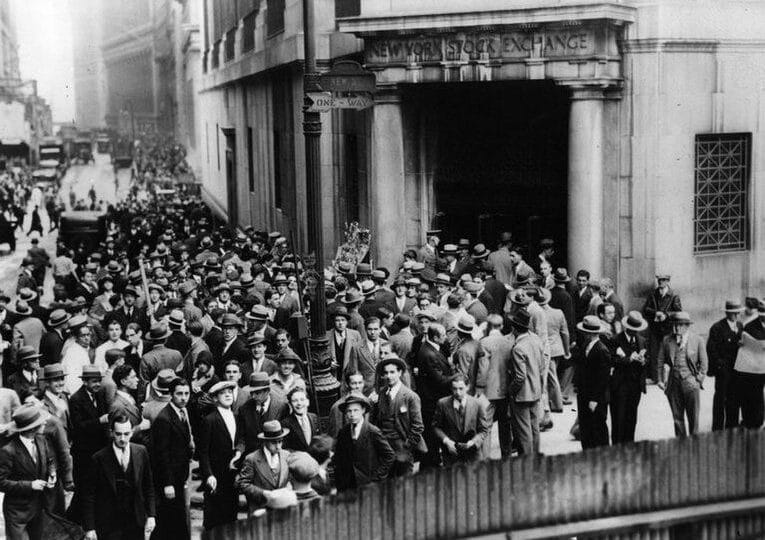

An unflinching look at the Great Depression: 15 facts that put modern struggles in perspective
While modern economic downturns and crises, such as the 2008 financial crisis or recent inflation, have been challenging and created genuine hardship for millions of families, the sheer scale and human cost of the Great Depression offer a crucial historical lens that provides perspective and informs our understanding of today’s struggles. Contemporary economic difficulties warrant serious attention and policy responses; yet, comparing them to the Depression reveals how profoundly different our current safety nets and institutional responses have become. The comparison isn’t meant to minimize present suffering but rather to illuminate how far economic policy and social support systems have evolved.
These facts are drawn from the Depression’s peak years between 1929 and 1933, a period of unprecedented economic collapse that fundamentally reshaped American government, social contracts, and financial institutions. The statistics and data cited are sourced from the U.S. Bureau of Labor Statistics, the Federal Reserve’s historical records, the National Bureau of Economic Research, the Franklin D. Roosevelt Presidential Library & Museum, and established historical scholarship on the period, as documented by reputable institutions such as the Library of Congress and the National Archives. Understanding the magnitude of the Depression helps explain why modern economists and policymakers respond so aggressively to economic downturns and why the reforms enacted during this period continue to shape monetary policy nearly a century later.

St Louis Federal Reserve
Unemployment reached catastrophic levels
At its peak in 1933, the unemployment crisis reached truly catastrophic proportions that challenge modern comprehension. According to the FDR Presidential Library & Museum, “At the height of the Depression in 1933, 24.9% of the total workforce or 12,830,000 people, was unemployed.” This staggering figure meant that nearly one in four Americans who wanted to work had no job and no income to support themselves or their families. The scale of joblessness exceeded anything the nation had experienced, with millions of previously middle-class families suddenly facing destitution. By comparison, the peak unemployment rate during the 2008 financial crisis was 10%, which, although severe and painful for those affected, represented less than half the rate of the Great Depression’s peak.
The unemployment figure understates the crisis in multiple ways because it doesn’t capture underemployment or those who stopped seeking work after exhausting all possibilities. The FDR Library notes that “although farmers technically were not counted among the unemployed, drastic drops in farm commodity prices resulted in farmers losing their lands and homes to foreclosure,” meaning rural unemployment was even worse than official statistics suggested. Many people who maintained employment saw their hours drastically reduced, creating partial unemployment that statistics didn’t fully reflect. The concentration of unemployment in industrial cities led to the formation of entire communities where the majority of residents had no income, overwhelming local relief systems. As the FDR Library documents, the crisis forced “families to split up or to migrate from their homes in search of work,” with “gangs of unemployed youth, whose families could no longer support them, rode the rails as hobos in search of work.”

St Louis Federal Reserve
GDP collapsed by nearly a third
The U.S. economy’s real GDP shrank by nearly 30% between 1929 and 1933, representing a contraction of economic output that dwarfed subsequent recessions. The collapse resulted in a nearly 30% decline in the total value of goods and services produced by the American economy, creating cascading effects throughout all sectors. As the Federal Reserve History website notes, describing the magnitude of the crisis, “The Depression was the longest and deepest downturn in the history of the United States and the modern industrial economy.” Manufacturing output fell even more dramatically, with industrial production declining by approximately 46% during the same period, leaving factories shuttered and workers unemployed across the nation’s industrial heartland.
The GDP collapse reflected not just reduced consumer spending, but also the complete breakdown of credit markets, international trade, and business investment, which paralyzed economic activity. Each business failure created ripple effects as suppliers lost customers and employees lost incomes, creating a downward spiral that conventional economic mechanisms couldn’t stop. The recovery took the entire decade of the 1930s, with the economy not fully recovering to its 1929 output levels until the mobilization for World War II. According to Federal Reserve historian Gary Richardson, “The contraction began in the United States and spread around the globe,” demonstrating how America’s economic collapse triggered a worldwide crisis. The Federal Reserve History account emphasizes that “industrial production plummeted. Unemployment soared. Families suffered,” capturing how abstract economic statistics translated into human misery affecting millions of households across the country.

St Louis Federal Reserve
More than 9,000 banks failed
Between 1930 and 1933, more than 9,000 banks failed, resulting in an estimated $140 billion in deposits when measured in 2017 dollars. The bank failures meant that ordinary people with savings accounts lost everything, as there was no insurance or government protection to recover their money. The cascade of bank failures created panic as depositors rushed to withdraw funds from any institution they feared might be next, creating self-fulfilling prophecies as banks struggled to meet withdrawal demands.
There was no Federal Deposit Insurance Corporation at the time to protect people’s savings, meaning that financial prudence offered no protection against bank failure. The loss of savings devastated families who had spent years accumulating emergency funds and retirement nest eggs. The banking system’s collapse also meant that businesses couldn’t access credit to meet payroll or purchase inventory, amplifying the economic crisis beyond the direct losses to depositors.

St Louis Federal Reserve
Deflation made debts crushing
Consumer prices fell by 25% and wholesale prices by 32% from 1929 to 1933, a phenomenon known as deflation that initially seemed beneficial but ultimately devastated the economy. Deflation made existing debts more expensive in real terms because people had to repay loans with money that was worth more than when they borrowed it, while their incomes fell dramatically. The falling prices incentivized people to hoard cash rather than spend it, since waiting meant their money would buy more in the future, creating a vicious cycle of reduced demand and further price declines.
Farmers were particularly devastated by deflation because crop prices collapsed while their mortgage debts remained constant, making it impossible to earn enough from harvests to cover loan payments. The deflation also meant that businesses couldn’t generate sufficient revenue to cover their fixed costs and debts, leading to widespread bankruptcy. Modern economists learned that deflation can be more damaging than inflation because it paralyzes economic activity in ways that are difficult to reverse.

St Louis Federal Reserve
Wages fell by more than 40%
The economic devastation extended even to those fortunate enough to remain employed, as the FDR Presidential Library documents that “wage income for workers who were lucky enough to have kept their jobs fell 42.5% between 1929 and 1933.” This dramatic decline meant that even the employed experienced severe declines in living standards, not just the jobless. The wage cuts reflected businesses’ desperate attempts to reduce costs during collapsing demand, with workers accepting any wage rather than joining the millions of unemployed.
The combination of reduced salaries and deflation created complex effects, with purchasing power declining somewhat less than nominal wages but still representing severe hardship. The wage declines meant that employed workers often couldn’t afford to help unemployed family members and neighbors, fracturing the informal support networks that might have cushioned the crisis. Young people entering the workforce faced virtually no job prospects at any wage, creating a lost generation whose careers were permanently damaged. The memory of these wage cuts influenced labor organizing and New Deal policies that established minimum wages and collective bargaining protections.

St Louis Federal Reserve
Hoovervilles housed the homeless
The homeless lived in makeshift shantytowns constructed from scrap wood, cardboard, and salvaged materials, sarcastically named “Hoovervilles” after President Herbert Hoover, whom many blamed for inadequate crisis response. As the FDR Library describes, these “‘Hoovervilles,’ or shantytowns built of packing crates, abandoned cars, and other scraps, sprung up across the nation.” These settlements appeared in every major city, often on vacant lots or public land where authorities initially tolerated them out of a lack of alternatives. The Hoovervilles represented visible symbols of economic failure and government inadequacy that shaped public opinion and political change.
The conditions in Hoovervilles lacked sanitation, running water, or any basic services, creating public health risks and human degradation that shocked observers. Families with children lived in these shacks, demonstrating how economic collapse pushed previously respectable working-class people into desperate poverty. The Hoovervilles’ existence contradicted American myths of universal prosperity and individual responsibility, forcing a recognition that systemic failures, rather than personal failings, caused the crisis.

St Louis Federal Reserve
Breadlines became commonplace
Millions of unemployed citizens relied on soup kitchens and breadlines for their meals, often run by private charities whose resources were overwhelmed by unprecedented demand. The breadlines became iconic images of Depression suffering, with photographs showing well-dressed men in suits waiting for hours for basic food assistance. The lines demonstrated how quickly middle-class respectability could disappear when jobs vanished and savings were exhausted.
The charitable organizations providing relief couldn’t meet the scale of need, as donations dried up when donors themselves faced economic hardship. Municipal governments attempted to provide relief but often lacked the necessary resources and, in some cases, the legal authority to spend adequately on direct assistance. The inadequacy of the breadlines demonstrated that private charity and local government couldn’t address the national economic catastrophe, building support for federal intervention.

St Louis Federal Reserve
The Dust Bowl forced mass migration
Severe drought, combined with poor farming practices, created the “Dust Bowl” across the Great Plains, with massive dust storms destroying crops and rendering the land unfarmable. The environmental catastrophe, layered on top of economic collapse and low crop prices, forced more than a million farming families to abandon their land and migrate west in search of agricultural work. The FDR Library notes that “residents of the Great Plains area, where the effects of the Depression were intensified by drought and dust storms, simply abandoned their farms and headed for California in hopes of finding the ‘land of milk and honey.'” The migrants, derisively called “Okies” regardless of their actual origins, faced hostility from western communities that saw them as unwanted competition for scarce jobs.
The Dust Bowl resulted partly from decades of intensive farming that removed native prairie grasses, leaving topsoil vulnerable to wind erosion when drought arrived. The crisis demonstrated how environmental degradation could amplify economic catastrophe, with the two forces combining to destroy entire communities. The migration streams from the Plains to California became iconic symbols of Depression desperation, immortalized in John Steinbeck’s “The Grapes of Wrath.”

St Louis Federal Reserve
Young people became hobos
An estimated 250,000 teenagers and young adults left their homes to ride the rails as “hobos” in search of work, as their families could no longer support them. The FDR Library describes how “gangs of unemployed youth, whose families could no longer support them, rode the rails as hobos in search of work.” The young people illegally hopped freight trains, traveling across the country looking for any employment while living in hobo camps near railway yards. The phenomenon represented family breakdown forced by economic necessity, with parents unable to feed their children and young people seeking opportunities elsewhere.
The hobo life was dangerous, with young people facing injury from trains, violence from railway police and other hobos, and exploitation from unscrupulous employers. The experience of this generation, forced into itinerant poverty during their formative years, shaped their values and politics for life. The sight of young people living this way shocked the public conscience and contributed to support for New Deal youth programs.

St Louis Federal Reserve
Radical movements gained support
Radical political movements gained unprecedented popularity as people lost faith in capitalism’s ability to provide basic security, with various proposals for wealth redistribution and economic reorganization attracting mass followings. Senator Huey Long’s “Share the Wealth” program, which promised to cap personal fortunes at $50 million and redistribute wealth to guarantee every family a minimum income, attracted millions of supporters. The Communist Party USA grew significantly as some Americans concluded that only systemic change could address systemic failure.
The popularity of radical alternatives frightened establishment politicians and business leaders, pushing them to support Roosevelt’s New Deal reforms as a moderate alternative to more revolutionary change. Father Charles Coughlin’s radio broadcasts reached millions with increasingly radical and eventually antisemitic messages blaming bankers and internationalists for the crisis. The political volatility demonstrated how economic catastrophe could undermine democratic stability and create openings for extremist movements.

St Louis Federal Reserve
Roosevelt’s bank holiday stopped panic
Upon taking office in March 1933, President Franklin D. Roosevelt declared a “bank holiday,” temporarily closing all banks to prevent a total collapse of the banking system as panicked depositors rushed to withdraw their funds. According to the FDR Library, when “FDR was inaugurated president on March 4, 1933, the banking system had collapsed,” necessitating immediate and dramatic action. The bold move stopped the cascading bank failures by giving regulators time to assess which banks were solvent and by breaking the panic psychology driving runs. Roosevelt’s first fireside chat, which explained the banking system and his actions, helped restore confidence, with deposits actually increasing when banks reopened.
The bank holiday represented unprecedented federal intervention in the economy, with the government essentially seizing temporary control of the banking system. The action’s success demonstrated that aggressive government action could address economic catastrophe in ways that waiting for market self-correction could not. The precedent established that the federal government bore responsibility for financial stability and could take extraordinary measures during times of crisis.

Library of Congress
The New Deal created alphabet soup agencies
FDR’s “New Deal” was a series of programs and public works projects designed to provide relief for the unemployed, stimulate economic recovery, and reform financial systems to prevent future crises. The FDR Library explains that “in the First Hundred Days of his new administration, FDR pushed through Congress a package of legislation designed to lift the nation out of the Depression.” The programs created dozens of agencies with acronyms that led to their collective nickname as “alphabet soup” agencies, from the AAA (Agricultural Adjustment Administration) to the WPA (Works Progress Administration). The New Deal fundamentally expanded federal government’s role in the economy and citizens’ lives, creating institutional changes that persist today.
The New Deal’s programs addressed immediate suffering while building infrastructure and reforming institutions, taking a comprehensive approach that recognized the crisis required multiple interventions. As the FDR Library notes, the AAA “stabilized farm prices and thus saved farms,” the CCC “provided jobs to unemployed youths while improving the environment,” and the TVA “provided jobs and brought electricity to rural areas for the first time.” Critics from the right attacked the programs as socialist overreach while critics from the left argued they didn’t go far enough in redistributing wealth and power. The political coalition that supported the New Deal reshaped American politics for generations, creating Democratic dominance that lasted into the 1960s.

Library of Congress
New Deal programs employed millions
Programs like the Civilian Conservation Corps and the Works Progress Administration employed millions of people on public works projects, providing both income for families and valuable infrastructure improvements. The WPA alone provided jobs for 8.5 million people over its existence, building roads, bridges, schools, and other public facilities while employing artists, writers, and musicians to document American culture. The FDR Library documents that “the FERA (Federal Emergency Relief Administration) and the WPA (Works Progress Administration) provided jobs to thousands of unemployed Americans in construction and arts projects across the country.” The CCC employed young men in conservation work, planting billions of trees and building parks while removing them from the jobless labor market.
The public employment programs demonstrated that the government could serve as an “employer of last resort” when private sector jobs disappeared, providing income that stimulated economic activity. The infrastructure built by these programs continued serving communities for decades, from post offices to dams to artwork adorning public buildings. The programs’ success influenced modern proposals for job guarantees and public employment programs during subsequent recessions.

Library of Congress
Social Security created a permanent safety net
The Social Security Act of 1935 established a permanent system of universal retirement pensions and unemployment insurance, fundamentally altering Americans’ relationship with the government and providing protections that were lacking during the early years of the Depression. The program represented recognition that modern industrial economies required social insurance against risks that individuals couldn’t manage alone, from unemployment to old age. Social Security remained controversial among conservatives who opposed government intervention, yet it became politically untouchable due to public support.
The unemployment insurance system created by Social Security meant that job loss no longer immediately caused destitution, as workers received temporary income support while seeking new employment. The old-age pensions addressed the reality that most workers couldn’t save enough to support themselves in retirement, particularly after the Depression bank failures had wiped out life savings. The program established the principle that the government bore responsibility for citizens’ basic economic security.

Library of Congress
Financial regulation protected against future crises
The New Deal established the Federal Deposit Insurance Corporation to insure bank deposits up to certain limits, preventing future banking panics by guaranteeing that depositors wouldn’t lose their savings even if their banks failed. The Securities and Exchange Commission was established to regulate stock markets and prevent the fraud and manipulation that contributed to the 1929 stock market crash. These regulatory agencies, while imperfect and subject to regulatory capture, provided oversight that made future financial crises less likely and less severe.
The regulations separated commercial banking from investment banking through the Glass-Steagall Act, preventing banks from engaging in speculative activities with depositors’ money in securities markets. The regulatory framework established that financial markets required government oversight because their failure imposed enormous costs on the entire economy and society. The gradual dismantling of some Depression-era regulations in subsequent decades contributed to the 2008 financial crisis, validating the original reformers’ concerns.

Library of Congress
Conclusion
The facts of the Great Depression are not meant to diminish current economic hardships but to contextualize them within a historical perspective that reveals both how far we’ve progressed in protecting against such catastrophes and how fragile prosperity remains. Contemporary struggles with inflation, unemployment, and inequality warrant serious policy responses; yet, the safety nets and institutional frameworks established during the Depression prevented the complete economic collapse that occurred in the 1930s. The comparison reveals the value of the regulations and social programs that continue to protect against worst-case scenarios.
The memory of the Great Depression has shaped the modern world’s economic institutions and social safety nets, making a repeat of such a collapse far less likely through mechanisms ranging from deposit insurance to aggressive central bank intervention. As the FDR Library notes, “the Depression hung on until 1941, when America’s involvement in the Second World War resulted in the drafting of young men into military service, and the creation of millions of jobs in defense and war industries,” demonstrating that even with aggressive New Deal interventions, full recovery required the massive economic stimulus of wartime mobilization. The period serves as a powerful reminder of how fragile prosperity can be and how quickly a financial crisis can become a profound human tragedy when institutional safeguards are absent. Understanding this history helps explain why economists and policymakers respond so forcefully to economic downturns and why dismantling Depression-era protections carries serious risks. Which of these historical facts most surprises you about how different the Depression was from contemporary economic challenges? Check out our other history-related articles here at MediaFeed to discover lessons that remain relevant for future challenges.
Related:
- US cities with the worst inflation problems: Did yours make the list?.
- 9 history documentaries that hit different today
Like MediaFeed’s content? Be sure to follow us.
This article was syndicated by MediaFeed.org.
AlertMe