History, as we often encounter it, can seem like a collection of established facts and grand pronouncements. Yet, the most profound insights into the past often lie not just in the words on a page, but in what’s between the lines, what’s omitted, or the subtle contexts that reveal deeper, sometimes uncomfortable, truths. Historical documents are multifaceted layers of information, reflecting not just explicit intentions but also underlying tensions, compromises, and biases.
Beyond the obvious declarations, skilled historians and keen observers can uncover these “hidden messages”—deliberate omissions, strategic wording, or even the very physical nature of a document—that fundamentally change our understanding of pivotal moments. Join us on a fascinating journey through some of the most iconic historical documents to expose the overlooked details and subtle narratives you might have missed.
Image Credit: Wiki Commons.
1. The U.S. Declaration of Independence

The U.S. Declaration of Independence stands as a beacon of liberty, proclaiming that “all men are created equal.” However, a significant “hidden message” lies in its carefully crafted omissions and downplayed “original sins.” Thomas Jefferson’s initial draft included a strong clause condemning King George III for the slave trade and for inciting insurrections among enslaved people. This powerful anti-slavery sentiment was, however, removed during the Continental Congress’s deliberations.
What it reveals: The removal of this clause was a direct compromise made to ensure the unanimous approval of Southern states, whose economies were deeply reliant on slavery.
Significance: This omission highlights the deep compromises and moral dilemmas at the nation’s founding, underscoring the contentious nature of slavery from America’s very inception and foreshadowing the conflicts that would lead to the Civil War.
Image Credit: Public domain.
2. Magna Carta (1215)
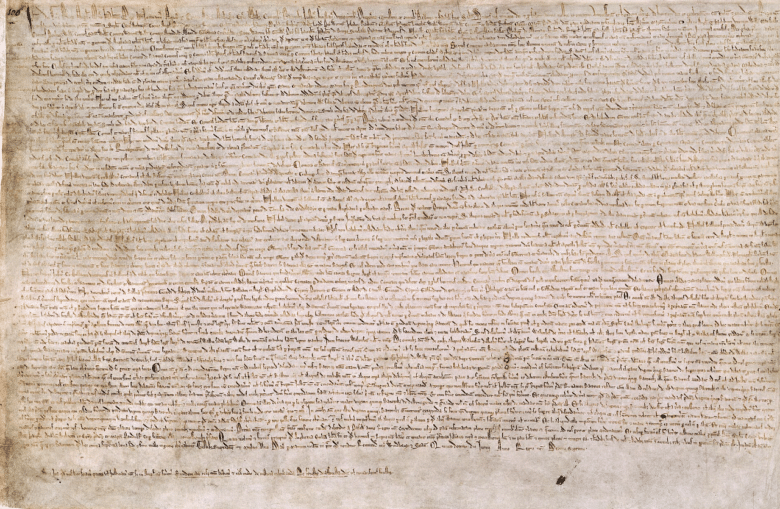
Celebrated as a cornerstone of modern democracy and individual liberties, the Magna Carta is often presented as a universal declaration of rights. Yet, its initial “hidden message” reveals it was, primarily, a specific deal struck for rebellious barons, not a charter for the common person.
What it reveals: Its original purpose was to settle a bitter dispute between King John and a group of powerful feudal lords, seeking to curb the king’s arbitrary power. The rights granted, such as due process, largely applied to “free men,” who constituted a small elite of the population, not the vast majority of serfs.
Significance: This demonstrates the evolutionary nature of rights. While its principles were later broadened and reinterpreted over centuries to apply to all citizens, the document’s origins show that fundamental liberties often begin with limited scope before their democratic application is achieved.
Image Credit: Wiki Commons.
3. The Treaty of Versailles (1919)

The Treaty of Versailles formally ended World War I, but its “hidden message” was that it inadvertently sowed the seeds for future, even greater conflict. Beyond simply dictating peace terms, the treaty imposed exceptionally harsh reparations, significant territorial losses, and a humiliating “War Guilt Clause” (Article 231) on Germany.
What it reveals: These punitive terms, driven by Allied desire for retribution, fostered deep resentment, economic instability, and a sense of national humiliation within Germany.
Significance: This points to how solutions to one conflict can, if not carefully considered, inadvertently create the very conditions for the next. The resentment fueled by Versailles contributed significantly to the rise of extremist ideologies in Germany, ultimately laying groundwork for World War II.
Image Credit: Wiki Commons.
4. Leonardo da Vinci’s Notebooks (Various)

Leonardo da Vinci’s vast notebooks are treasure troves of his genius, filled with inventions, anatomical studies, and philosophical musings. A curious “hidden message” within them is his consistent use of “mirror writing”—script that runs from right to left, requiring a mirror to read easily.
What it reveals: While some speculate this was a form of secrecy or code, it was likely also his natural preference as a left-hander, allowing him to write fluidly without smudging his wet ink.
Significance: This peculiar habit offers a fascinating glimpse into Leonardo’s unique thought process, his practical artistic habits, and the incredibly inventive and often unconventional mind of a Renaissance polymath.
Image Credit: Public Domain / Wikimedia Commons.
5. The Gettysburg Address (1863)
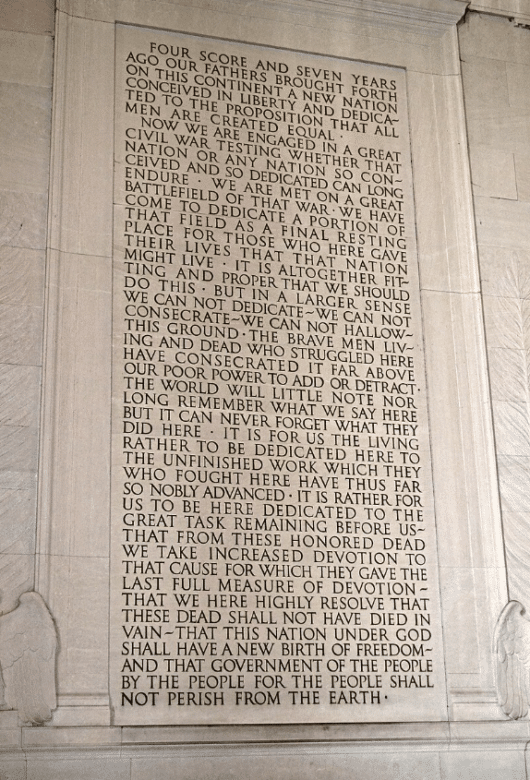
Abraham Lincoln’s Gettysburg Address is revered for its brevity and poetic eloquence. Its profound “hidden message,” however, lies in Lincoln’s subtle yet powerful redefinition of the Civil War’s purpose, executed within just 272 words.
What it reveals: While the war initially began to preserve the Union, Lincoln skillfully shifted the narrative to frame it as a fight for human equality. By invoking the Declaration of Independence’s promise that “all men are created equal,” he implicitly included the abolition of slavery as a central moral objective of the conflict.
Significance: This short speech profoundly transformed the moral stakes of the war, elevating it from a geopolitical struggle to a crusade for human rights, and laying crucial groundwork for future civil rights movements in America.
Image Credit: Wiki Commons.
6. The Rosetta Stone (196 BCE/1799 Discovery)
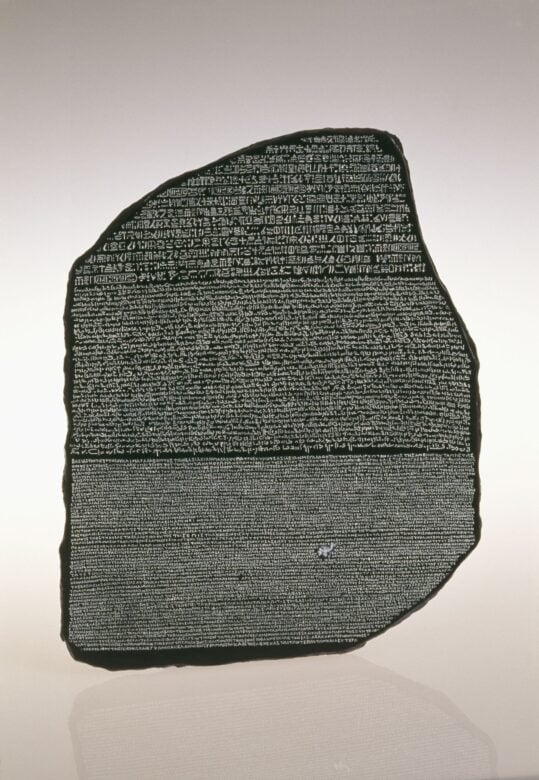
The Rosetta Stone itself doesn’t contain a secret text or hidden prophecy. Its incredible “hidden message” was its very structure: it presented the same decree in three different scripts.
What it reveals: The decree was inscribed in Ancient Egyptian hieroglyphs, Demotic script (a later Egyptian script), and Ancient Greek (which scholars could read). This triple inscription was the “key” that allowed brilliant minds like Jean-François Champollion to finally decipher the long-lost language of Egyptian hieroglyphs.
Significance: The discovery of the Rosetta Stone unlocked millennia of ancient Egyptian history, culture, religion, and daily life that had been inaccessible for centuries, revolutionizing our understanding of one of the world’s most enduring civilizations.
Image Credit: gyro / iStock.
7. George Washington’s Farewell Address (1796)
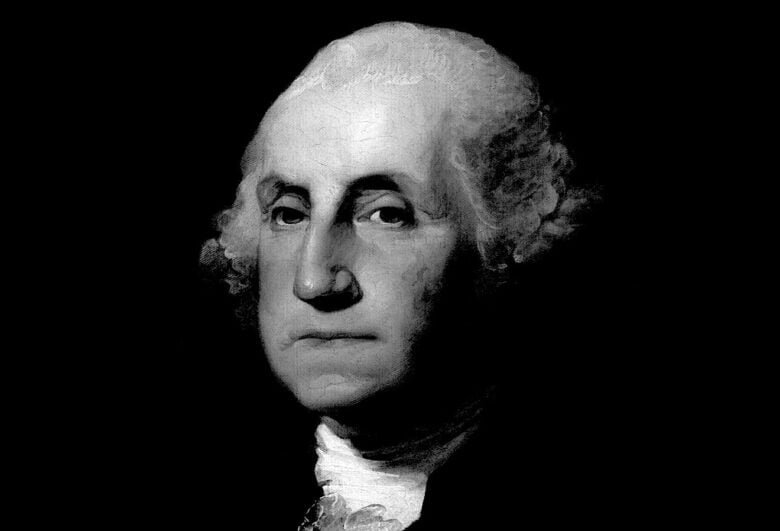
George Washington’s Farewell Address is a foundational text of American political thought, widely known for its advice on avoiding permanent foreign alliances. Yet, its deeper “hidden message” also contained a profound warning against domestic political factions.
What it reveals: Washington’s intense focus on the dangers of partisan divides and the “spirit of party” reflected his deep anxieties about the young republic’s stability. He feared that unchecked factionalism would tear the nation apart from within, even more so than foreign threats.
Significance: This document laid crucial groundwork for American foreign policy (neutrality) but also delivered domestic political warnings that remain strikingly relevant today, continuing to be debated in discussions about bipartisanship and political polarization.
Image Credit: .
8. The Emancipation Proclamation (1863)
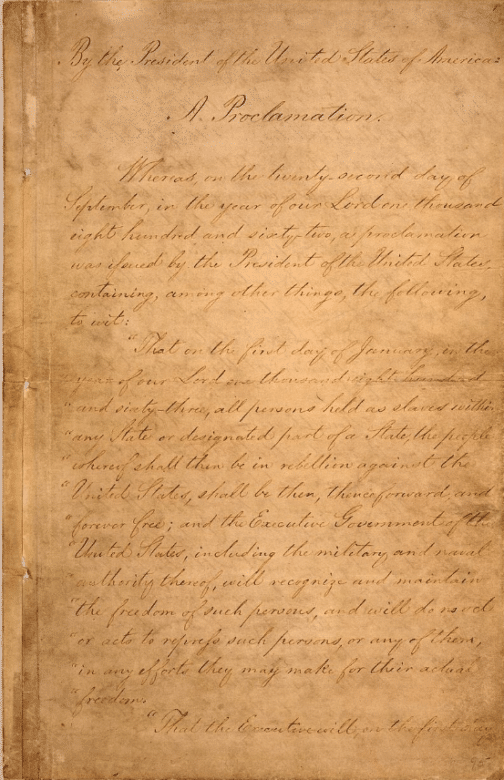
The Emancipation Proclamation is celebrated as the document that freed enslaved people during the American Civil War. However, its “hidden message” reveals it was also a shrewd strategic military move as much as a moral declaration.
What it reveals: The proclamation specifically freed enslaved people only in the Confederate states (states in rebellion against the Union). It notably did not free enslaved people in Union slave states (border states like Maryland or Kentucky) or in Confederate territories already under Union military control. This strategic limitation was designed to prevent those crucial border states from defecting to the Confederacy.
Significance: This illustrates the complex interplay of moral imperative and military strategy during wartime, and how the path to freedom was a gradual, hard-won process deeply intertwined with the Union’s military objectives.
Image Credit: Wiki Commons.
9. The Bayeux Tapestry (c. 1070s)

The Bayeux Tapestry is a magnificent embroidered cloth depicting the events leading up to the Norman Conquest of England and the Battle of Hastings in 1066. Its “hidden message” is that it’s fundamentally a Norman victors’ narrative, not a neutral historical record.
What it reveals: Commissioned by Bishop Odo, William the Conqueror’s half-brother, the tapestry subtly or overtly portrays William’s invasion as justified and ordained, while often depicting the English (led by King Harold) as oath-breakers, less prepared, or even treacherous. Details are included or omitted to reinforce the Norman perspective.
Significance: This illustrates how “history” can be a deliberate form of propaganda. It emphasizes the critical importance of considering the source’s perspective and potential biases when interpreting historical accounts, reminding us that every narrative has a point of view.
Image Credit: Wiki Commons.
10. The Treaty of Westphalia (1648)
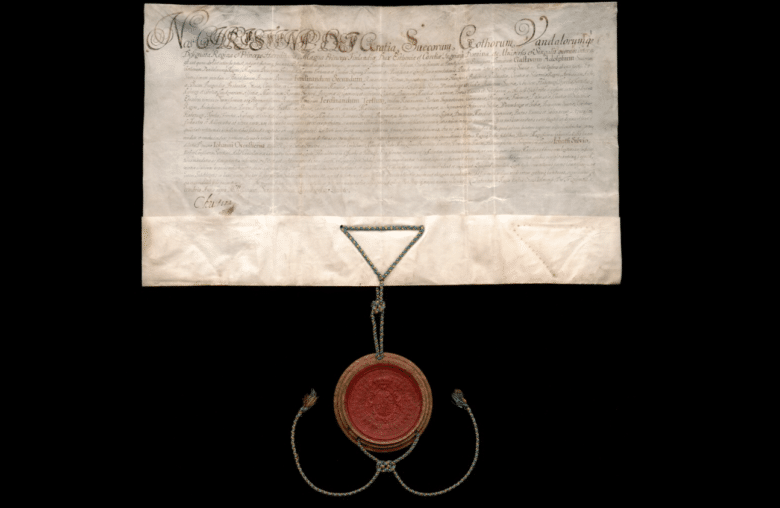
The Treaty of Westphalia is often cited for ending the devastating Thirty Years’ War in Europe. Its most profound and enduring “hidden message,” however, was the quiet birth of the modern concept of nation-states and national sovereignty.
What it reveals: While it resolved immediate conflicts, its most impactful outcome was establishing the principle that rulers of states held exclusive authority within their own territories. This fundamentally reshaped international relations, moving away from the dominance of religious empires towards independent, sovereign states with defined borders and non-interference in internal affairs.
Significance: This was a pivotal, though often overlooked, moment that laid the groundwork for the modern global political system we recognize today, demonstrating how seemingly less dramatic clauses in historical documents can have the most far-reaching consequences.
Image Credit: Wiki Commons.
Hidden History

These examples vividly demonstrate that historical documents are far from simple, straightforward records. They are multifaceted artifacts, laden with layers of intention, compromise, and unspoken truths. Uncovering these “hidden messages” requires more than just reading the words; it demands careful interpretation, a deep understanding of historical context, and a keen eye for biases and deliberate omissions.
Ultimately, the power of these overlooked details is immense. They remind us that history is never truly simple and that by questioning the narratives presented, we can unlock profound insights that continually reshape our understanding of the past and, by extension, our present. The search for these hidden truths is a continuous journey, for the most revealing insights often lie just beneath the surface.
Related:
- How These 16 Award-Winning Photographs Came To Be
- Then & Now: A Photo History of the World’s Favorite Tech
Like MediaFeed’s content? Be sure to follow us.
This article was syndicated byMediaFeed.org.
Image Credit: ChamilleWhite / iStock.
AlertMe