

Most commonly misheard song lyrics of the 1980s
You’re belting out your favorite ’80s anthem at the top of your lungs, completely confident in every word, when someone stops you mid-chorus to point out that you’ve been singing the wrong lyrics for decades. Welcome to the wonderful world of mondegreens, those delightfully incorrect interpretations of song lyrics that feel so right until you discover they’re completely wrong. This phenomenon extends beyond simple mishearing; it reveals our brains working overtime to make sense of sounds that don’t quite reach our ears with perfect clarity.
The 1980s created a perfect storm for lyrical confusion. This was the decade when synthesizers dominated the soundscape, drum machines provided thunderous beats, and vocal effects transformed human voices into otherworldly instruments. Production techniques emphasized atmosphere and energy over crystal-clear vocal delivery, while artists experimented with everything from talk-singing to operatic wailing. Add in the compressed audio quality of radio broadcasts and cassette tapes, and you have a recipe for some truly spectacular misinterpretations.
These misheard lyrics represent badges of honor that connect us to a shared musical experience. Every generation has its classic mishearings, but the ’80s produced some of the most enduring and hilarious examples in pop music history. From synthesizer-heavy new wave to arena-shaking rock anthems, these fourteen songs demonstrate how the decade’s distinctive sound created lyrics that were as open to interpretation as they were impossible to forget.

Image Credit: IMDb
“Blinded by the Light” by Manfred Mann’s Earth Band
What most people sing: “Wrapped up like a deuce, another runner in the night.”
What the artist actually sings: “Revved up like a deuce, another runner in the night”
Manfred Mann’s Earth Band’s cover of Bruce Springsteen’s original transforms an already complex lyrical phrase into one of music’s most famous mondegreens. The rapid-fire delivery combined with the unfamiliar term “deuce” (referring to a 1932 Ford Model B, nicknamed a “deuce coupe”) creates confusion that has persisted for decades. The mishearing makes a certain poetic sense, suggesting someone wrapped up and ready for action, even though the actual lyric refers to a souped-up car revving its engine.

Image Credit: IMDb
“Sweet Dreams (Are Made of This)” by Eurythmics
What most people sing: “Sweet dreams are made of cheese, who am I to disagree?”
What Annie Lennox actually sings: “Sweet dreams are made of this, who am I to disagree?”
The Eurythmics’ synthesizer-driven masterpiece creates one of the most endearing mishearings in pop music. Annie Lennox’s precise pronunciation of “this” somehow morphs into “cheese” for countless listeners, creating an inadvertently food-focused interpretation of the song’s existential questioning. The mishearing has become so widespread that it’s spawned countless internet memes and even inspired cheese-themed parodies of the original song.

Image Credit: Wikipedia
“Born in the U.S.A.” by Bruce Springsteen
What many people sing: “Born in the U.S.A., I’m a cool rockin’ daddy”
What Bruce actually sings: “Born in the U.S.A., I was brought into the world”
Bruce Springsteen’s anthemic delivery, shouted over driving guitars and pounding drums, makes specific words difficult to distinguish. The powerful, almost aggressive vocal style that makes this song so compelling also creates ambiguity in its verses. This particular mishearing demonstrates how listeners often substitute familiar rock and roll phrases when the actual lyrics become unclear, transforming political commentary into generic rock bravado.

Image Credit: IMDb
“Summer of ’69” by Bryan Adams
What some people sing: “I got my first real six-string, bought it at the five and dime.”
What Bryan Adams actually sings: “I got my first real six-string, bought it at the five-and-dime”
While technically not a mishearing of pronunciation, Bryan Adams’ reference to a “five-and-dime” store often confuses younger listeners unfamiliar with this type of retail establishment. The phrase refers to stores where items cost five or ten cents, popular in early-to-mid 20th-century America. Modern listeners sometimes interpret this as separate words or substitute more familiar retail references, missing the nostalgic specificity of the original lyric.

Image Credit: IMDb
“Panama” by Van Halen
What many people sing: “Cannibal! Cannibal! Cannibal! Uh-huh!”
What David Lee Roth actually sings: “Panama! Panama! Panama! Uh-huh!”
Van Halen’s high-energy rock anthem suffers from David Lee Roth’s characteristically energetic vocal delivery combined with Eddie Van Halen’s aggressive guitar work. The hard consonant sounds get lost in the mix, transforming the song’s tribute to a race car (named Panama) into something that sounds decidedly more carnivorous. This mishearing has become so famous that it’s often referenced in discussions of rock music’s most amusing lyrical confusions.

Image Credit: IMDb
“Livin’ on a Prayer” by Bon Jovi
What many people sing: “It doesn’t make a difference if we’re naked or not.”
What Jon Bon Jovi actually sings: “It doesn’t make a difference if we make it or not”
Bon Jovi’s stadium-sized anthem creates one of rock’s most notorious mishearings through simple phonetic similarity. The phrase “make it” when sung quickly and with passion sounds remarkably similar to “naked,” creating an interpretation that dramatically changes the song’s meaning from hopeful determination to something far more risqué. This mishearing demonstrates how context and expectation influence what we think we hear.

Image Credit: IMDb
“Africa” by Toto
What some people sing: “I bless the rains down in Africa, gonna take some time to do the things we never had.”
What Toto actually sings: “I bless the rains down in Africa, gonna take some time to do the things we never could”
Toto’s soft rock masterpiece ends this particular line with a word that gets swallowed in the mix. The difference between “could” and “had” might seem minor, but it changes the philosophical implications of the lyric. “Could” suggests possibility and potential, while “had” implies loss and nostalgia. The mishearing transforms the song’s message from one of hope and determination to one of regret and longing.

Image Credit: IMDb
“We Built This City” by Starship
What some people sing: “We built this city on sausage rolls!”
What Starship actually sings: “We built this city on rock and roll!”
Starship’s controversial but undeniably catchy anthem produces one of music’s most amusing mishearings. The phonetic similarity between “rock and roll” and “sausage rolls” creates a mishearing that’s become legendary for its absurdity. This particular mondegreen demonstrates how our brains sometimes substitute familiar concepts when lyrics become unclear, creating unintentionally humorous alternatives to the original meaning.

Image Credit: IMDb
“With or Without You” by U2
What some people sing: “I’m waiting for you.”
What Bono actually sings: “I wait for you”
U2’s emotionally charged ballad features Bono’s characteristic vocal style, which elongates certain words and phrases for dramatic effect. His sustained pronunciation of “wait” often sounds like “waiting for,” creating a mishearing that actually maintains the song’s meaning while changing its grammatical structure. This example shows how even minor mishearings can feel completely natural and appropriate within a song’s context.

Image Credit: IMDb
“Every Breath You Take” by The Police
What many people sing: “Every bond you break, every single day.”
What Sting actually sings: “Every bond you break, every step you take”
The Police’s seemingly romantic but actually rather sinister hit creates confusion through the substitution of a common lyrical phrase. “Every single day” appears in countless songs, making it a natural replacement when “every step you take” becomes unclear. This mishearing demonstrates how familiar song structures and common phrases influence what we think we hear, even when the actual lyrics fit the song’s meter and meaning more precisely.

Image Credit: IMDb
“Don’t You Want Me” by The Human League
What some people sing: “You were working as a waitress in a cocktail bar.”
What The Human League actually sings: “You were working as a waitress in a cocktail bar”
The Human League’s synth-pop classic occasionally suffers from quick delivery that makes “bar” sound like “ball” or other similar words. While this mishearing is less common than others on this list, it demonstrates how even relatively straightforward vocals can be misinterpreted when delivered at tempo. The substitution of “ball” for “bar” creates a completely different setting for the song’s narrative.

Image Crefit: IMDb
“Take on Me” by A-Ha
What some people sing: “Take me on, I’ll be gone in a day or two.”
What A-Ha actually sings: “Take on me, I’ll be gone in a day or two”
A-Ha’s Norwegian accent, combined with the song’s distinctive vocal delivery, creates confusion about the exact phrasing of the chorus. The repetition of “take on me” often gets heard as “take me on” due to natural speech patterns and the way the syllables flow together. This mishearing maintains the song’s confrontational energy while slightly altering its grammatical structure.
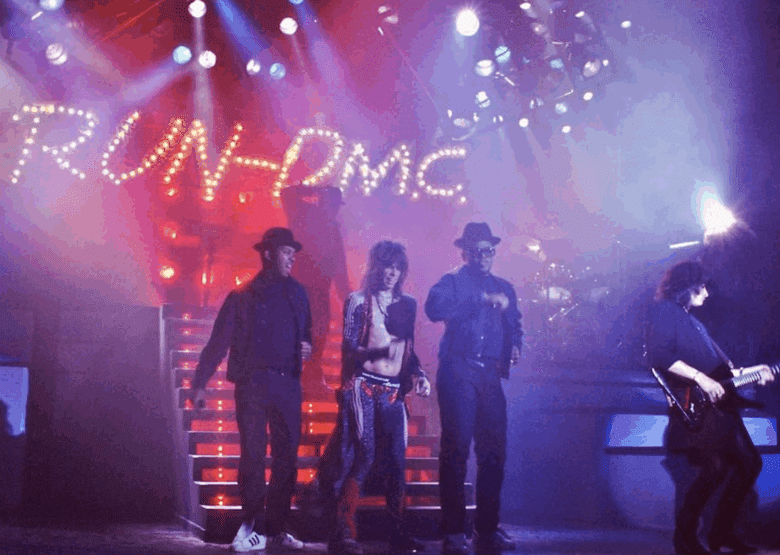
Image Credit: IMDb
“Walk This Way” by Run-DMC ft. Aerosmith
What some people sing: “Walk this way, talk this way, I’m a little bit confused.”
What the artists actually sing: Various interpretations of rapid-fire rap delivery
Run-DMC’s collaboration with Aerosmith features rapid-fire rap delivery that can be challenging to follow for listeners unfamiliar with hip-hop styles. The quick pace and overlapping vocals create multiple opportunities for mishearing, with listeners often substituting more familiar phrases when the lyrics become unclear. This illustrates how different musical styles can generate new forms of lyrical confusion.

Image Credit: IMDb
“Every Little Thing She Does Is Magic” by The Police
What some people sing: “Every little thing she does is magic, everything she does just turns me on.”
What The Police actually sings: “Every little thing she does is magic, everything she does just turns me on” (with slight variations in delivery)
The Police’s upbeat track sometimes creates confusion through Sting’s vocal delivery and the song’s rhythmic complexity. While the core lyrics remain relatively straightforward, the way certain phrases are emphasized or delivered can lead to minor variations in interpretation, demonstrating how even beloved songs can contain moments of lyrical ambiguity.

Image Credit: DutchScenery / istockphoto.
The fun of mishearing
These lyrical mix-ups create some of the most endearing shared experiences in music culture. Mondegreen research shows that our brains constantly work to make sense of ambiguous audio information, filling in gaps with what seems most logical or familiar. When we mishear lyrics, we demonstrate the incredible creativity of human perception and the power of music to connect with us even when we don’t quite understand what’s being said.
The social aspect of discovering misheard lyrics adds another layer of enjoyment to music appreciation. There’s something delightfully humbling about learning you’ve been singing the wrong words to a favorite song for years, and something equally satisfying about sharing these discoveries with others. Music psychology studies suggest that these shared experiences of lyrical confusion actually strengthen our connection to songs rather than diminishing them.
The 1980s created particularly fertile ground for these mishearings through its distinctive production techniques, diverse vocal styles, and experimental approach to sound. These songs remain beloved partly because of their lyrical ambiguities rather than despite them. The mishearings have become part of the songs’ folklore, adding layers of meaning and creating additional ways for listeners to engage with the music.

Image Credit: Zinkevych/iStock
Conclusion
The next time you discover you’ve been singing the wrong lyrics to a favorite ’80s song, feel connected to millions of other listeners who’ve had the exact same experience. These misheard lyrics represent the beautiful imperfection of human perception and the way music transcends literal meaning to create emotional connections. Whether you’re singing about cheese instead of dreams or cannibals instead of Panama, you’re participating in a grand tradition of creative mishearing that makes music more fun, more personal, and more memorable.
The 1980s gave us incredible music that continues to soundtrack our lives decades later. These lyrical confusions provide additional reasons to celebrate the decade’s enduring impact on popular culture. After all, a song that can make us laugh at our own mistakes while still moving us to sing along might just be the perfect kind of art.
Ready to test your knowledge of more ’80s classics? Check out our other music retrospectives and lyrical deep-dives here at MediaFeed for more trips through the soundtracks that defined a generation!
Related:
- The 10 most commonly misheard song lyrics of the 1970s
- How many of these ’80s songs can you name based on just …
Like MediaFeed’s content? Be sure to follow us.
This article was syndicated by MediaFeed.org.
AlertMe