
Best war movies and series you should rewatch
War films and series attempt the impossible challenge that has confronted filmmakers since cinema’s earliest days: translating the chaos, heroism, trauma, and tragedy of combat into compelling storytelling that can somehow convey to civilian audiences what it means to face death, witness unspeakable horror, lose comrades, and carry those experiences for a lifetime. The technical challenges alone are staggering—recreating massive battles, coordinating hundreds of extras, creating convincing period settings, and capturing the confusion and violence of combat without glamorizing or trivializing the reality that soldiers actually experienced. The ethical challenges are even more profound: how do you make entertainment from human suffering? How do you honor the dead while creating narratives that audiences will watch? How do you balance historical accuracy with dramatic necessity? The best war productions navigate these impossible tensions by combining spectacular action with intimate character studies, showing both the large-scale strategic dimensions of war and the personal costs borne by individual soldiers and their families.
The best war productions are more than mere entertainment; they serve as cultural memory, historical education, and tribute to those who served while helping civilian audiences understand the actual costs of conflict in ways that abstract statistics and textbook accounts cannot convey. These films and series create empathy by putting audiences in the boots of soldiers experiencing fear, making split-second life-or-death decisions, watching friends die, and carrying trauma long after the shooting stops. They preserve the memory of specific battles and campaigns that might otherwise fade from collective memory, ensuring that sacrifices made generations ago remain part of our cultural understanding. They also serve a crucial function in helping veterans feel seen and understood by validating their experiences, depicting on screen the realities they lived through that civilian society often struggles to comprehend or acknowledge.
War storytelling has undergone significant cinematic evolution from feature films to streaming series, expanding the possibilities for how military experience can be depicted and understood. The traditional two-hour war film format, while capable of tremendous impact, necessarily compresses expertise and focuses on specific moments or battles, leaving much of the broader context and character development on the cutting room floor. The multi-episode series format that has flourished in the streaming era allows for deeper, more nuanced explorations of military experience, following the same characters through multiple engagements, showing how combat changes them over time, exploring relationships between soldiers with depth previously available only in novels, and providing historical context that feature films can only gesture toward. This evolution means we can now experience war stories with unprecedented scope and intimacy, understanding both the grand strategic picture and the personal toll on individuals caught in history’s machinery.

Amblin Entertainment
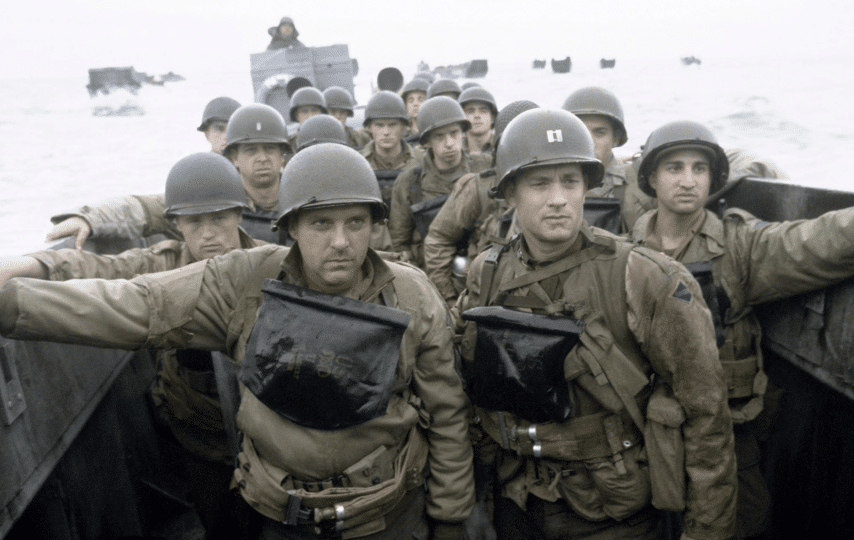
“Saving Private Ryan” (1998): Spielberg’s visceral D-Day landing that redefined war movie realism
Steven Spielberg’s “Saving Private Ryan” opened with perhaps the most intense and realistic combat sequence ever filmed, a 27-minute recreation of the D-Day landing at Omaha Beach that traumatized audiences, sent PTSD-suffering veterans fleeing from theaters, and fundamentally changed how war would be depicted in cinema going forward. The sequence abandons traditional Hollywood battle choreography in favor of documentary-style chaos, with handheld cameras capturing the disorientation of soldiers emerging from landing craft into withering machine gun fire, with the sound design creating an overwhelming sensory assault that replicates combat’s confusion, and with graphic violence showing bodies torn apart by bullets in ways that earlier war films had sanitized. Spielberg employed numerous technical innovations—desaturated color to evoke period newsreel footage, removing half the frames to create a stuttering effect that suggests how memory works under extreme stress, and using combat veterans as advisors to ensure that every detail from equipment to tactics reflected historical reality.
The film’s narrative follows Captain John Miller (Tom Hanks) and his squad on a mission to find Private James Ryan (Matt Damon) and send him home after his three brothers have all been killed in combat, a premise that allows Spielberg to explore questions about the value of individual lives in warfare, the bonds between soldiers, and whether the mission of saving one man can justify risking eight others. The film balances spectacular action with intimate character moments, giving each squad member a distinct personality and backstory so that when they die (and most do), the losses feel personal rather than merely serving the plot. The framing device of an elderly Ryan visiting Miller’s grave decades later makes explicit that the film is about memory, trauma, and the impossibility of those who weren’t there truly understanding what soldiers experienced. In contrast, the final line—”Earn this”—places a moral burden on Ryan (and by extension on all of us who live in freedom purchased by others’ sacrifices) to live lives worthy of what was given.

HBO
“Band of Brothers” (HBO): Multi-part series following Easy Company through WWII Europe
“Band of Brothers,” the 2001 HBO miniseries produced by Steven Spielberg and Tom Hanks, transformed how television could depict war by applying feature film production values and storytelling ambition to a ten-episode series following Easy Company of the 506th Parachute Infantry Regiment from their training through D-Day, Operation Market Garden, the Battle of the Bulge, and ultimately to the capture of Hitler’s Eagle’s Nest. Based on historian Stephen Ambrose’s book, which drew from interviews with actual Easy Company veterans, the series benefits from the extended format to develop characters over time, showing how green recruits became hardened combat veterans, how leadership emerged and evolved under fire, and how the accumulation of losses and trauma affected men psychologically even as they continued to function as soldiers. The series doesn’t focus on a single protagonist but instead treats the entire company as the hero, allowing different characters to take focus in different episodes while maintaining continuity of the unit’s experience, with each episode opening with contemporary interviews of surviving Easy Company veterans (though the series doesn’t identify which character each veteran portrayed until the final episode), grounding the dramatic recreation in the testimony of men who actually lived these experiences.
What distinguished “Band of Brothers” was its commitment to historical accuracy, from large-scale recreations of famous battles to small details of equipment, tactics, and soldier experience. It combined these with production values that rivaled theatrical films, making television war storytelling newly prestigious and ambitious. The series doesn’t shy from showing the moral complexity of war, including the shooting of German prisoners by American soldiers, the numbing effects of constant combat on soldiers’ humanity, and the difficulty of readjusting to civilian life after experiencing the intensity of brotherhood forged in battle. “Band of Brothers” became the gold standard for war series, demonstrating that the miniseries format could provide both the spectacle of major feature films and the character depth and narrative scope previously available only in novels, influencing every war series that followed and proving that audiences would embrace complex, serious historical drama if it were executed with sufficient craft and respect for the subject matter.

HBO
“The Pacific” (HBO): Companion series exploring the brutal Pacific Theater campaign
“The Pacific,” the 2010 HBO miniseries that served as a companion piece to “Band of Brothers,” explored World War II’s Pacific Theater through the experiences of three Marines—Robert Leckie, Eugene Sledge, and John Basilone—who fought in some of the war’s most brutal island campaigns, including Guadalcanal, Peleliu, and Okinawa. Where “Band of Brothers” followed a single unit through the European theater, “The Pacific” took a more fragmented approach, reflecting how the Pacific war’s island-hopping campaign created different experiences than the continuous front lines in Europe, with Marines enduring short, incredibly intense battles separated by long periods of waiting, boredom, and fear aboard ships or in rear areas. The series drew from the memoirs of Leckie and Sledge, two Marines who became writers and processed their combat trauma through literature, offering a more literary and psychological approach than “Band of Brothers” focuses on unit cohesion and leadership.
“The Pacific” depicts a fundamentally different kind of war than its European companion series, showing combat against an enemy that fought with tactics (including suicide charges and refusing surrender) that horrified American soldiers, in jungle and island environments where heat, disease, and terrain were as deadly as the enemy, and with a racial animosity on both sides that made the conflict particularly brutal and dehumanizing. The series doesn’t shy from showing how American soldiers viewed Japanese forces through racist lenses, how the nature of Pacific combat brutalized Marines psychologically in ways that made atrocities more likely, and how the accumulation of these experiences created trauma that survivors carried for decades. The inclusion of John Basilone’s story, following him from Medal of Honor hero used for war bond drives back to combat where he was killed on Iwo Jima, adds a dimension about how the military uses heroes for propaganda purposes while exploring a man’s need to return to combat despite having earned the right to avoid it, making “The Pacific” harder to watch than “Band of Brothers,” more psychologically dark and less heroic in its depictions, but serving the purpose of conveying a theater of war that was particularly horrific and that deserves to be remembered and understood.

Zoetrope
“Apocalypse Now” (1979): Coppola’s surreal journey into the psychological darkness of the Vietnam War
Francis Ford Coppola’s “Apocalypse Now” remains one of cinema’s most ambitious attempts to capture not just the physical reality of war but its psychological and spiritual dimensions, using the Vietnam War as the setting for an adaptation of Joseph Conrad’s “Heart of Darkness” that explores how war strips away civilization’s veneer and reveals humanity’s capacity for madness and evil. The film follows Captain Willard (Martin Sheen) on a mission up a Vietnamese river to find and assassinate Colonel Kurtz (Marlon Brando). Colonel Kurtz is a Special Forces officer who has gone rogue and established himself as a god-like figure among indigenous forces, creating his own kingdom beyond military control and moral constraints. Coppola’s film is deliberately surreal and hallucinatory, using music, imagery, and narrative structure to create an experience that mimics a descent into hell or madness rather than providing realistic combat depictions, making it fundamentally different from more straightforward war films in its artistic ambitions and its willingness to use war as a metaphor rather than focusing on documentary-style realism.
The film’s most famous sequences have entered popular culture as defining images of the Vietnam War even though they prioritize artistry and symbolism over strict historical accuracy: the helicopter assault set to Wagner’s “Ride of the Valkyries,” the surreal USO show featuring Playboy Playmates, the tiger encounter in the jungle, and the final confrontation with Kurtz in his compound decorated with corpses and presided over by a man who has embraced the horror he sees as war’s essential truth. Coppola’s production became as legendary as the film itself, with the shoot in the Philippines extending far over schedule and budget, with Sheen suffering a heart attack during filming, with Brando arriving overweight and unprepared, and with Coppola himself experiencing a breakdown, paralleling in production the themes of civilization breaking down under the pressures of war and jungle. “Apocalypse Now” argues that the Vietnam War was not just a military conflict but a psychological and moral catastrophe that revealed uncomfortable truths about American power, violence, and the thin line between civilization and savagery, making it essential viewing not for its realism but for its artistic vision of war as humanity’s descent into primal darkness.

HBO
“Generation Kill” (HBO): Modern Iraq War series showing 21st-century combat reality
“Generation Kill,” the 2008 HBO miniseries based on embedded journalist Evan Wright’s book, provides the most accurate depiction of 21st-century combat available in popular media, following the First Reconnaissance Battalion during the 2003 invasion of Iraq with documentary-like attention to the mundane details, confusing rules of engagement, technological advantages and limitations, and generational attitudes of soldiers who grew up on video games and extreme sports. Created by David Simon and Ed Burns (the team behind “The Wire”), the series applies their characteristic attention to institutional dysfunction, showing how military bureaucracy, poor planning, inadequate equipment, and incompetent leadership created dangerous situations for frontline troops even as their tactical excellence and adaptability allowed them to accomplish missions despite rather than because of the system. The series captures how modern war differs from WWII’s apparent moral certainties. Marines are uncertain about their mission’s purpose, frustrated by rules of engagement they don’t understand, and trying to distinguish civilians from insurgents in a conflict without clear front lines or easily identifiable enemies.
What makes “Generation Kill” particularly valuable is its unflinching depiction of military culture, including the casual racism, homophobia, and misogyny that pervades the Marine Corps, the dark humor soldiers use to cope with stress and boredom, the contempt that frontline troops often feel toward officers and rear-echelon support personnel, and the complex mixture of professionalism, idealism, and cynicism that characterizes modern volunteer military forces. The series doesn’t glorify its subjects but presents them as complicated humans capable of both exceptional courage and casual cruelty, both tactical brilliance and shocking lapses in judgment, showing how the same unit can liberate civilians from oppression one day and accidentally kill innocent people the next. The Marines depicted in “Generation Kill” are products of early 21st-century American culture, raised on media and technology in ways that affect how they experience and process combat, making the series essential for understanding how modern war differs from previous generations’ experiences and how the volunteer military composed of a tiny percentage of Americans serving multiple tours creates different dynamics than the mass conscript armies of earlier wars.

Amusement Park
“All Quiet on the Western Front” (1930): Anti-war masterpiece showing WWI from the German perspective
“All Quiet on the Western Front,” based on Erich Maria Remarque’s novel and released just twelve years after World War I ended, remains one of cinema’s most powerful anti-war statements, depicting the conflict from the perspective of young German soldiers who enlisted with patriotic enthusiasm only to discover the horror of trench warfare that destroyed bodies, minds, and the entire generation of young men who fought. The film’s power comes partly from its proximity to the actual war, made when veterans were still young men and the trauma was fresh, and partly from its willingness to show war not as heroic adventure but as industrial-scale slaughter that turned human beings into expendable resources fed into the machinery of national conflict. Director Lewis Milestone’s battle sequences remain shocking decades later, with tracking shots following soldiers through no-man’s land as they’re mowed down by machine guns, with depictions of gas attacks and bombardments that convey the sensory assault of modern warfare, and with images of wounded and dying soldiers that emphasize war’s physical devastation in ways that were groundbreaking for 1930s cinema.
The film’s narrative follows Paul Bäumer and his classmates from their schoolroom where a teacher convinces them that military service is glorious duty through their training, their first exposure to combat, and the gradual realization that everything they were told about war was a lie designed to make them willing to die for abstract concepts like nation and honor that have no meaning in the trenches. The film’s most powerful sequences include Paul killing a French soldier in a shell hole and then spending hours with the dying man, apologizing and reading letters from his family, recognizing that the “enemy” is simply another young man like himself caught in the same catastrophe; and Paul’s return home on leave where he finds that civilians have no understanding of what he’s experienced and that he can no longer connect with his former life. The film’s ending, with Paul reaching for a butterfly and being shot by a sniper just before the armistice, encapsulates its message that war destroys the young for no purpose, killing them for no meaningful gain just before the pointless conflict finally ends, making “All Quiet on the Western Front” one of cinema’s most effective arguments against war’s glorification and one of the few films that successfully conveys why WWI is remembered as a uniquely traumatic and meaningless conflict.

Foxstar
“The Vietnam War” (Ken Burns): Comprehensive documentary series examining America’s longest war
Ken Burns and Lynn Novick’s 18-hour documentary series “The Vietnam War,” released in 2017, represents the most comprehensive filmed examination of America’s most divisive 20th-century conflict, drawing from over 100 witnesses, including American and Vietnamese combatants and civilians, antiwar protesters, and policymakers, to create a kaleidoscopic portrait of how people on all sides experienced the war. Burns applies his characteristic approach of combining archival footage (much of it never before seen), period music, and contemporary interviews with participants to create an immersive experience that doesn’t simplify the war into heroes and villains but instead shows how well-intentioned people on all sides made decisions that led to catastrophe, how historical forces larger than any individual shaped events, and how the war’s consequences continue to affect American politics and culture decades after the last helicopter left Saigon. The series is particularly valuable for including Vietnamese voices (both North Vietnamese forces and South Vietnamese civilians and soldiers) that American accounts typically exclude, providing perspective on how the war appeared to the people in whose country it was being fought.
The documentary’s power comes from its scope, showing the war’s entire arc from French colonial rule through American advisors, through escalation and Americanization of the conflict, through the Tet Offensive and the beginning of American withdrawal, and finally through the fall of Saigon, while also examining the American home front where anti-war protests grew and where political consensus collapsed. Burns shows how the war was shaped by Cold War ideology, by presidential decisions made to avoid appearing weak, by American underestimation of Vietnamese nationalism and willingness to endure suffering for independence, and by a series of strategic and tactical failures that policymakers compounded by lying to the American public about progress being made. The series doesn’t avoid controversial topics, examining atrocities like My Lai, the Pentagon Papers revelation that administrations had knowingly lied about the war’s progress, the abandonment of South Vietnamese allies when America finally withdrew, and the long-term consequences including PTSD in veterans, Agent Orange’s continuing effects, and the breakdown of consensus that divided America politically in ways that persist today, making “The Vietnam War” essential viewing for understanding not just the conflict itself but how it shaped American institutions, politics, and culture.

Wingnut Films
“They Shall Not Grow Old” (2018): Peter Jackson’s restored WWI footage brings history to life
Peter Jackson’s documentary “They Shall Not Grow Old” uses modern technology to restore and colorize century-old footage from World War I, adding sound effects and lip-reading to create voices for silent film soldiers, transforming scratchy, sped-up black-and-white images into something that feels immediate and contemporary, closing the temporal distance that usually makes historical footage feel safely removed from present reality. The film’s technical achievement in restoration makes it significant—Jackson and his team processed hundreds of hours of footage, correcting the speed (old cameras operated at different frame rates than modern playback, making people move unnaturally fast), stabilizing shaky handheld shots, repairing damage, and adding color based on research into uniforms and equipment, creating images of WWI that look more like modern war zone footage than traditional archival material. This transformation profoundly makes the soldiers visible as individual human beings rather than historical abstractions, allowing contemporary audiences to see in their faces and body language the same fear, exhaustion, dark humor, and camaraderie that characterize soldiers in all eras.
The film’s sound design adds another layer of immediacy, with Jackson using forensic lip-readers to determine what soldiers in the silent footage were saying and then hiring actors from the same British regions to voice the dialogue in appropriate dialects, while also adding sound effects for artillery, rifles, and ambient battlefield noise based on historical research and recordings. The film is structured around the soldier’s journey from recruitment and training to deployment to the Western Front and combat experience. Finally, through demobilization and return home, the narration consists entirely of audio from BBC interviews with WWI veterans recorded in the 1960s and 1970s, allowing the soldiers to tell their own stories in their own words without imposing interpretive narrative. The result is a film that makes WWI feel less like ancient history and more like a recent conflict, emphasizing that the soldiers who fought were not fundamentally different from modern people despite the century that separates us, and that their experiences of fear, trauma, brotherhood, and the struggle to process what they’d been through resonate across time in ways that help modern audiences understand why this conflict continues to matter and why we must remember the human cost behind the strategic and political narratives.

Apple TV
“Masters of the Air” (Apple TV+): Air combat series focusing on bomber crews over Europe
“Masters of the Air,” the 2024 Apple TV+ series from the same producers as “Band of Brothers” and “The Pacific,” explores World War II’s air war over Europe by following the 100th Bomb Group of the Eighth Air Force, completing the trilogy of WWII series by depicting the one significant aspect of the American war effort not covered by the previous series. The show examines the unique experience of bomber crews who lived on comfortable bases in England but flew into deadly combat during daylight bombing missions over Nazi-occupied Europe, facing German fighters and anti-aircraft fire while flying in formation at high altitudes in unpressurized aircraft, then returning to base (if they survived) to sleep in absolute beds and drink at the local pub before doing it all again the next day. This created a psychological dynamic different from either ground combat or fighter pilot experience, with bomber crews experiencing the surreal contrast between the deadly horror of their missions and the relative comfort and normalcy of their base life, creating its own form of trauma as they watched friends die in mid-air explosions while knowing they’d have to climb back into a bomber the next day.
The series depicts the statistical nightmare of the bomber campaign. Early in the war, crews had only about a 25% chance of surviving their required 25 missions, making each mission essentially Russian roulette, where losses were not occasional but instead expected and constant. The show explores how this affected crews psychologically, how officers tried to maintain morale when everyone knew the odds, how the continuous loss of friends created a form of emotional armor where survivors learned not to get too close to new crews who would likely die soon, and how the few who did complete their tours struggled with survivor’s guilt and the knowledge that they’d bombed cities where thousands of civilians died. “Masters of the Air” also examines the racial segregation that characterized the American military even in WWII’s supposedly “good war,” depicting the Tuskegee Airmen and the discrimination they faced while defending bombers whose crews benefited from their protection while maintaining racist attitudes, combining spectacular aerial combat sequences utilizing modern CGI with intimate character drama that shows both the strategic importance of the air campaign in weakening Germany’s industrial capacity and the human cost paid by young men who volunteered to fly into deadly skies day after day.

Amblin Pictures
“1917” (2019): Single-shot WWI film capturing the immediacy of trench warfare
Sam Mendes’s “1917” employs the technical virtuosity of appearing to be filmed in a single continuous shot to create unprecedented immediacy and tension, following two British soldiers on a desperate mission to cross no-man’s-land and reach a regiment about to walk into a German trap, with the real-time presentation making audiences feel as if they’re experiencing every moment alongside the characters without the temporal jumps and perspective shifts that traditional editing provides. The single-shot approach (actually several long takes seamlessly stitched together but designed to appear continuous) means viewers cannot look away or mentally disengage during difficult moments, creating an exhausting intensity that mirrors the soldiers’ experience of being unable to escape their circumstances or take a break from danger. Director of photography Roger Deakins creates stunning compositions even within the constraints of the continuous camera movement, with the journey through destroyed landscapes, abandoned trenches, burning cities, and corpse-filled craters becoming a tour through hell that showcases WWI’s unique horrors of industrial-scale destruction.
The film’s narrative is deliberately simple—two soldiers must deliver a message to stop an attack—but this simplicity creates a focused, relentless forward momentum that never lets up until the mission is complete. The journey becomes a condensed experience of WWI combat, with the soldiers encountering different aspects of the war (aerial combat, sniper fire, exploding booby traps, a destroyed French village, a desperate mother with a baby, German soldiers both hostile and humanized) that collectively create a comprehensive portrait of the war’s multifaceted horror. The film’s sound design contributes enormously to its impact, with the constant background noise of distant artillery and the sudden shocking violence of explosions and gunfire creating sensory assault that matches the visual intensity, demonstrating that technical innovation in filmmaking can serve storytelling purposes beyond mere spectacle, with the single-shot approach creating an experiential quality that makes the film feel less like watching a story and more like enduring an ordeal, helping audiences understand in visceral rather than intellectual terms what it meant to be a soldier in WWI’s nightmare landscape.

Image Credit: DepositPhotos.
Conclusion
These war productions pay tribute to military service while honestly depicting war’s complexities and costs. They fulfill the dual obligations of honoring those who served and refusing to glorify or romanticize the violence, trauma, and moral ambiguities that characterize actual combat. The best war films and series reject the simplistic narratives where heroes defeat villains through righteous violence, instead showing how war transforms everyone it touches, how even justified conflicts extract terrible costs from those who fight them, how the bonds formed in combat are both precious and born from circumstances no one would choose, and how the consequences of war extend far beyond the battlefield into veterans’ entire lives and into the societies that sent them to fight. These productions serve as counter-narratives to the sanitized, glorified versions of war promoted by military recruitment and political rhetoric. They insist that civilians have a moral obligation to understand what is actually being asked of service members when nations choose to go to war.
The evolution toward series format has allowed for deeper character development and more comprehensive historical coverage than traditional feature films could provide, letting audiences follow characters through multiple episodes and years of war, showing how combat changes people over time rather than presenting them as static heroes, and providing the historical context and political background that help viewers understand not just individual battles but entire campaigns and conflicts. The ten-hour runtime of “Band of Brothers” or the eighteen-hour runtime of Burns’s Vietnam documentary allows for a completeness and complexity that no two-hour film can match. This creates what amounts to visual novels that can develop characters, explore themes, and examine historical events with depth previously available only in written histories. This doesn’t diminish the achievement of great war films, which can deliver concentrated emotional impact and artistic vision in ways that longer series cannot. Still, it does mean that audiences now have access to multiple formats for understanding military experience, each with its own strengths and purposes.
Related:
Like MediaFeed’s content? Be sure to follow us.
This article was syndicated by MediaFeed.org.
AlertMe