This article was reviewed by Julia Switzer, MD, FACOG.
Estrogen Gel vs. Patch HRT: A Side-by-Side Comparison
Key Takeaways
- Estrogen gels and patches are both effective HRT options for easing menopause symptoms like hot flashes and mood swings.
- Gels offer flexible daily dosing, while patches provide steady hormone release over several days.
- Transdermal patches may pose a lower risk of blood clots and stomach issues than oral estrogen.
- Your ideal option depends on your lifestyle and health needs — talk with your healthcare provider to find the best fit.
Estrogen gel vs. patch — which is the better HRT option for you? If menopause symptoms like hot flashes, night sweats, and mood swings are impacting your life, you don’t have to power through. Hormone replacement therapy (HRT) is a proven way to get relief.
Estrogen gels and patches are two types of whole-body (systemic) HRT that provide relief from widespread menopause symptoms.
Below, we cover how estrogen gel and patches work, the pros and cons of each, possible side effects, and how to decide which is right for you.
What Is HRT? An Overview
Hormone replacement therapy (HRT) works by replacing the hormones that naturally decline during perimenopause and menopause. These include estrogen and progesterone. By restoring hormone levels, HRT can help ease symptoms like:
- Hot flashes
- Night sweats
- Mood swings
- Vaginal dryness and discomfort
- Trouble sleeping
If you still have your uterus, your healthcare provider will likely recommend combined HRT. This includes both estrogen and progesterone (or a synthetic progestin). Taking this combination is key, because progesterone protects your uterine lining from the effects of estrogen, lowering your risk of uterine (endometrial) cancer.
Some women use low-dose vaginal estrogen to exclusively target the vaginal and urinary symptoms of menopause. Due to the low dose and the fact that it is minimally absorbed into the bloodstream, combined progesterone therapy isn’t usually necessary.
Research shows that starting HRT within 10 years of menopause — or before age 60 — usually offers more benefits than risks.
Now, let’s compare two popular HRT options: estrogen gel and estrogen patches.
What Is Estrogen Gel?
Estrogen gel is a type of HRT you apply directly to your skin — usually on your arm, shoulder, or thigh — once daily. The gel absorbs through your skin and enters your bloodstream, helping to relieve menopause symptoms throughout your whole body.
Most estrogen gels contain estradiol, the main type of estrogen in HRT. You might see it called estradiol gel, oestradiol gel, or brand names like Estrogel®.
Many people choose gels for their ease of use. There are no pills to swallow and no patch to wear. Sometimes, doctors prescribe gels with progesterone as part of a combined HRT plan.
Estrogen Gel Side Effects
Like any medication, estrogen gel can cause side effects. Though not everyone experiences them, and many fade as your body adjusts. Possible side effects include:
- Headaches
- Nausea, bloating, or gas
- Breast tenderness or swelling
- Mood changes
- Hair loss
- Weight changes
- Spotting or irregular vaginal bleeding (if you still have a uterus and aren’t taking progestogen)
- Skin irritation where you apply the gel
Since the gel is absorbed through your skin, it may cause fewer stomach issues than pills. But, the overall risks — like a slightly higher chance of blood clots, stroke, or certain cancers — are similar to other estrogen therapies.
Your age, health history, and whether you use estrogen alone or with progesterone can affect these risks.
What Is an Estrogen Patch?
An estrogen patch is another type of HRT. They usually contain estradiol, so you might hear them called estradiol patches. Some patches combine estrogen and progestin, like CombiPatch®.
You stick the patch on a hair-free area, like your lower belly or upper butt. It’s designed to stay put through showers, swims, and your daily routine. If it falls off, don’t worry — just put on a new one.
There are two main types of estrogen patches:
- Reservoir patches. The hormone is in a small compartment and released steadily.
- Matrix patches. The hormone is embedded directly into the sticky part for even skin absorption.
Estrogen patches do more than ease hot flashes and night sweats. They may also improve reproductive function more than estrogen pills. They’re a good option if you have a sensitive stomach or a higher risk of blood clots, since the hormone bypasses your liver. Some research even links patches to a lower risk of gallbladder disease and fewer blood clots compared to oral estrogen.
Estrogen Patch Side Effects
Common estrogen patch side effects include:
- Headaches
- Breast tenderness
- Nausea and vomiting
- Constipation, gas, and bloating
- Weight changes
- Mild skin irritation or redness where you apply the patch
Compared to oral estrogen, patches might cause fewer digestive issues. Plus, since they deliver a steady stream of hormones, patches might have a lower risk of mood swings.
More serious but less common risks of the estrogen patch include:
- Blood clots
- Stroke
- Certain cancers
If you experience severe side effects, persistent skin irritation, or issues with patches coming loose, your healthcare provider might suggest switching brands or exploring other HRT options.
Estrogen Gel vs. Patch Pros and Cons
Here’s a side-by-side comparison of estrogen gel and estrogen patches:
Gels might suit someone who wants daily symptom control without using patches, while patches may work better for those who prefer less frequent dosing and a simpler routine.
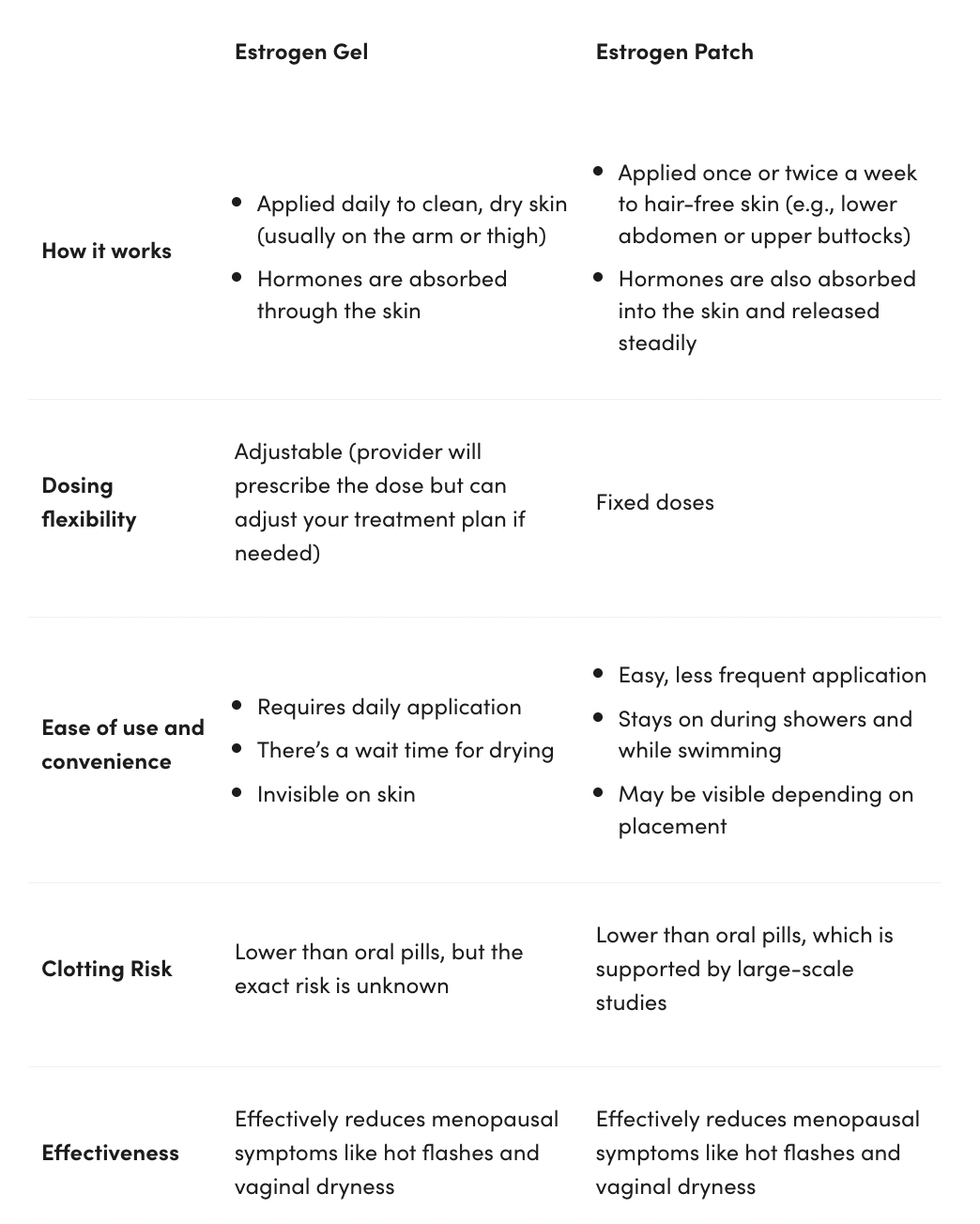
Gels might suit someone who wants daily symptom control without using patches, while patches may work better for those who prefer less frequent dosing and a simpler routine.
Are There Any Other Topical Hormone Replacement Treatments?
Yes. Topical low-dose vaginal estrogen therapy is different from systemic estrogen options like patches or gels you use on your skin. Systemic products send estrogen throughout your whole body, while local estrogen targets only vaginal and urinary symptoms like dryness, itching, irritation, or recurring urinary tract infections (UTIs).
This type of estrogen comes as a cream, tablet, or ring and delivers a small amount of the hormone right to the vaginal tissue. Very little gets into your bloodstream, so it won’t help with whole-body symptoms like hot flashes or mood swings.
Local estrogen is a great choice if you only need relief from vaginal symptoms. Research shows it works for up to 90 percent of users and is generally safe, even for women with a history of cancer, since it doesn’t have the same risks as other hormone therapies.
Estrogen Gel vs. Patch: Bottom Line
Estrogen gels and patches are two of the most common treatments for menopause symptoms. Let’s recap:
- Both gels and patches go right on your skin. This makes them easy to apply and ideal for people who forget to or don’t want to take daily pills.
- Both carry a lower risk of blood clots compared to oral estrogen. Patches, in particular, have extra research to back this up.
- Patches give you a steady, controlled dose over several days. Gels offer more flexibility in dosing, but you’ll need to remember to apply gel daily and ensure it absorbs properly.
- If you still have your uterus, your doctor will likely recommend adding progesterone (or a progestin) to your treatment. This helps protect your uterine lining.
Ultimately, your choice depends on your unique needs and lifestyle. Talk openly with your healthcare provider and don’t be afraid to ask questions. Together, you can figure out a menopause treatment solution that fits your needs.
Related:
Like MediaFeed’s content? Be sure to follow us.
This article originally appeared on ForHers.com and was syndicated by MediaFeed.org.
AlertMe