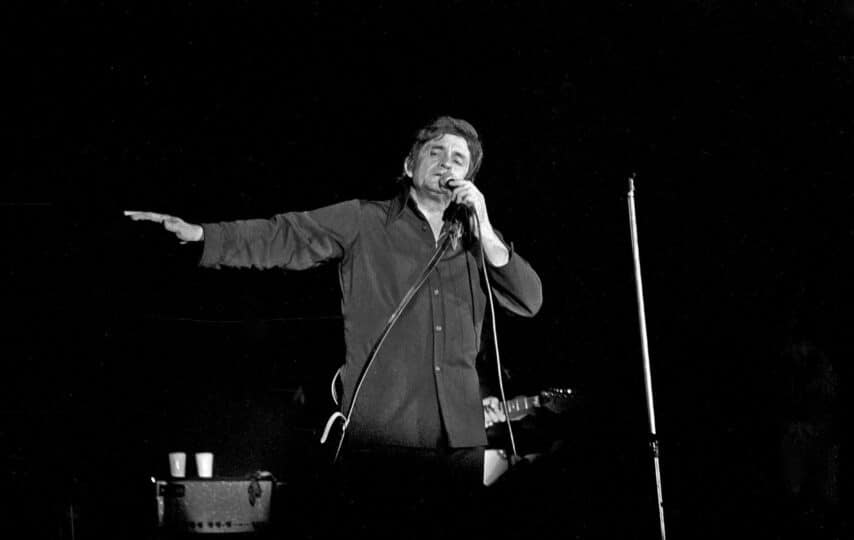

When music became medicine: Icons who created to survive
Late-night studio sessions hold more than track recordings. For certain legendary musicians, those hours represented survival itself. Between scribbled notebooks and recording equipment, creativity transformed from artistic expression into essential therapy. These artists didn’t just make music because they could. They made it because they absolutely had to.
Johnny Cash
Cash battled amphetamine addiction throughout the 1960s while carrying profound guilt from his brother’s childhood death. His confessional songwriting and prison concerts became structured outlets for processing moral struggle. Songs like “Folsom Prison Blues” didn’t just tell stories: they externalized internal demons he couldn’t face directly.
Joni Mitchell
Childhood polio, a 2015 brain aneurysm, and mysterious Morgellons disease couldn’t stop Mitchell’s creative drive. When physical limitations prevented touring, she shifted to painting and revisiting her music. Her 1971 album “Blue,” written during a period of depression after her breakup with Graham Nash, channeled heartbreak into poetic songwriting. Constant reinvention wasn’t just an artistic choice: it was emotional alchemy.
David Bowie
Industry pressure, anxiety, and identity crises drove Bowie to construct personas like Ziggy Stardust and the Thin White Duke. These weren’t costumes: they were emotional safe houses. During his cocaine-fueled Thin White Duke phase in 1976, the character allowed him to detach from feelings he couldn’t process directly. Creating alter egos gave him distance, transformation, and ultimately healing.
Aretha Franklin
Franklin became a mother at age 12 following sexual assault, lost her mother at 10, and endured an abusive marriage while navigating relentless public expectations. Her gospel-infused singing became both personal sanctuary and spiritual force. Producer Jerry Wexler called her “Our Lady of Mysterious Sorrows,” recognizing how she channeled inexplicable pain into unmatched vocal depth.
Kurt Cobain
Chronic stomach pain, depression, and fame pressures consumed Cobain. His raw, unfiltered lyrics and distorted sound became emotional metaphors for internal turmoil. Songs like “Lithium” and “Pennyroyal Tea” read like journal entries, helping him externalize what he couldn’t speak aloud. Songwriting offered release, even when it couldn’t fully heal.
Nina Simone
Racial violence, bipolar disorder, and industry exploitation fueled Simone’s powerful political anthems. After Medgar Evers’ assassination and the Birmingham church bombing, she wrote “Mississippi Goddam” faster than she could transcribe it. Creativity gave her agency and purpose when emotional overwhelm threatened to consume her.
Freddie Mercury
Despite massive fame, Mercury struggled with identity and loneliness. His theatrical stage personas let him inhabit a larger-than-life joy in dark, private moments. Off-stage, he was quiet and deeply insecure. On-stage, he became untouchable. Performance was transformed.
Takeaway
These artists prove creativity isn’t just talent: it’s therapy. They made meaning from suffering and found emotional safety when life offered none. Their stories remind us that even icons struggle deeply, and art heals, connects, and sustains us through even the most challenging moments.
Related:
- America’s 100 Most Favorite Musicians of All Time
- 10 secrets behind popular ’80s songs we bet you didn’t know
Like MediaFeed’s content? Be sure to follow us.
This article was syndicated by MediaFeed.org.
AlertMe